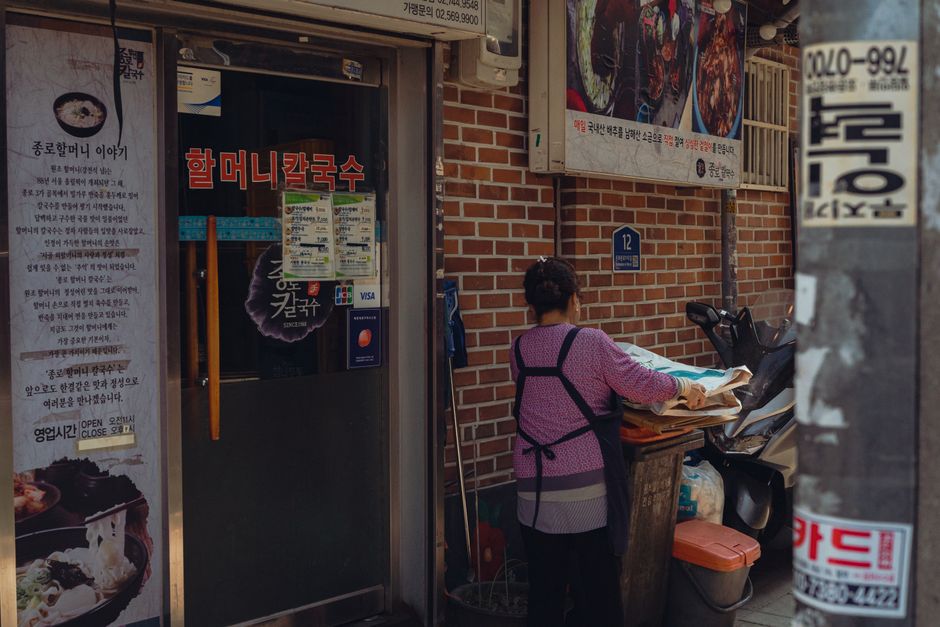
I still remember the sheer panic of my first week living in Hongdae. I had just finished a late-night delivery of jjajangmyeon, and I confidently tossed the black plastic container and chopsticks into a random bin outside my building. Within ten minutes, my landlord was banging on my door, holding the bag and shouting something about “fines” and “recycling.” I had committed a cardinal sin in South Korea: I treated trash like trash.
If you are living in Mapo-gu, specifically the chaotic, vibrant streets of Hongdae, you already know that waste disposal here is not just a chore—it is a rigid, legally enforced ritual. The days of throwing everything into one bin are over the moment you land at Incheon. Here is how to navigate the maze of Korean recycling without getting fined or yelled at by your neighbors.
The Mandatory “Jongnyangje” Bag System
You cannot just use any black garbage bag from the convenience store. In Mapo-gu, you are required to buy official *Jongnyangje* (volume-based waste bags) for general trash. These are usually sold at local supermarkets or convenience stores. In Hongdae, you will pay around 1,000 to 2,000 KRW for a medium-sized bag. If you put your trash in a regular plastic bag, the collectors will simply leave it there, or worse, rip it open to find evidence of who threw it. If they find your address on a receipt inside, you will receive a hefty fine. Use the yellow bags for food waste and the designated clear or colored bags for recycling, but always check the specific district rules because Mapo-gu has its own color coding.
The “Clean Recycling” Obsession
Korean recycling rules are strict about cleanliness. You cannot just toss a greasy pizza box or a dirty yogurt container into the recycling bin. The rule is simple: if it is contaminated with food or oil, it goes in the general trash (the *Jongnyangje* bag). For plastics, you must remove labels and caps. For glass bottles, remove the caps. For cardboard, you must flatten it and remove all tape. In Hongdae, where delivery food is a way of life, this is the hardest habit to break. Rinse your containers before recycling. If you don’t, the building manager or the “trash police” will leave your recycling on the sidewalk with a sticky note of shame.
The Food Waste Separation Nightmare
Food waste is a massive deal here. You cannot put food scraps in the general trash. You must separate it into a designated food waste bin, usually a yellow or green bucket located in the communal trash area of your building. In Mapo-gu, you either pay for special food waste bags or use a communal bin that charges by weight (RFID). The catch? You must drain all liquid from the food waste. If you throw watery kimchi stew into the bin, you will be fined. During the summer, this bin will smell horrific, so keep a small bin in your freezer to store food scraps until trash day to avoid fruit flies.
The Brutal Truth
Here is the harsh reality that no one tells you: In Korea, the trash collectors are essentially private contractors who can refuse to take your trash if it is not perfectly sorted. Unlike in some Western countries where they just take everything, here they will leave your bag on the street for days, and your neighbors will know exactly who the “dirty foreigner” is. There is no anonymity in a Korean apartment building. If you mess up, you will be publicly shamed by the ajumma next door before you ever receive an official fine. The system relies on social pressure as much as legal enforcement.
Conclusion
It feels overwhelming at first, I know. I spent my first month terrified of the trash police, but eventually, it becomes second nature. Think of it as a rite of passage for living in Seoul. Once you master the *Jongnyangje* bags and the recycling sorting, you are officially a local. Just remember: when in doubt, rinse it out, and if it’s greasy, put it in the general trash. You’ve got this.
태그 : 한국 재활용 규칙, Korean trash disposal rules, Hongdae expat guide, Mapo-gu recycling rules, Korea food waste separation, Jongnyangje bags Korea, living in Seoul tips

🛒 Korea Life Essential: Recycling bin labels Korea
One of the must-have items to make your life in Hongdae, Mapo, Seoul easier and more enjoyable!
| 🇰🇷 Coupang | Buy on Coupang |
| 🌍 AliExpress | Buy on AliExpress |
This post contains affiliate links. We may earn a small commission at no extra cost to you.