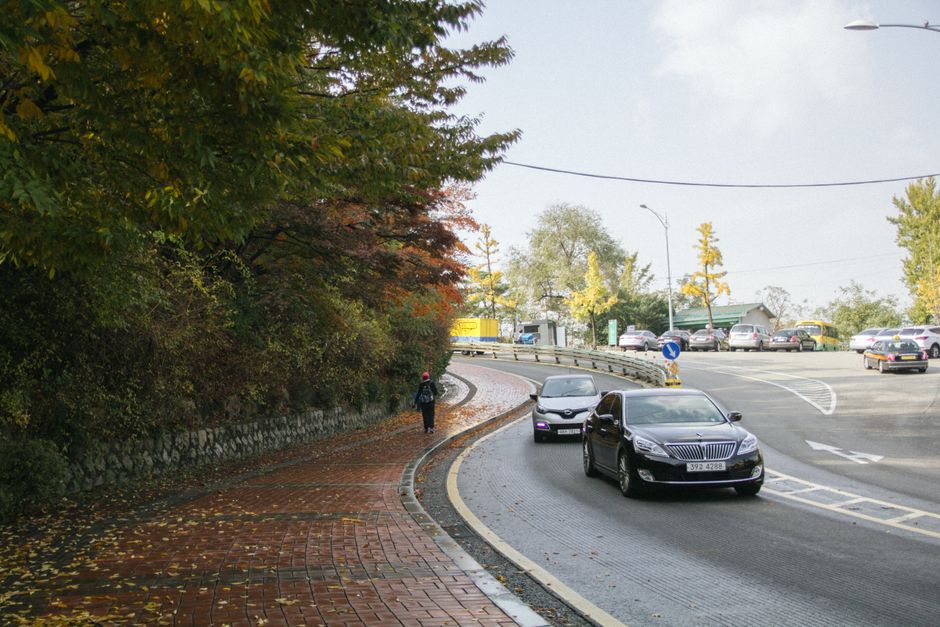
I still remember the sheer panic of trying to park a rented Kia in a narrow alley behind the Grand Hyatt. I had been living in Itaewon for two years, comfortably relying on the subway and taxis, until a job promotion required me to drive. I walked into the Yongsan DMV (Nambu Driver’s License Examination Office) thinking I could just swap my home country’s license for a Korean one. Three hours, a failed eye test, and a confusing conversation at the information desk later, I realized I was completely unprepared. If you are living in Yongsan or Itaewon and thinking about getting behind the wheel, you need a battle plan. Here is the brutally honest, step-by-step guide I wish I had.
1. The “Itaewon Shortcut” vs. The Full Test
If you are from a country that has a reciprocal agreement with Korea (like the US, UK, Canada, Australia, etc.), you can exchange your foreign license for a Korean one without taking the road test. However, the process at the Yongsan DMV is strict. You need your Alien Registration Card (ARC), your original passport, your foreign license, and an official apostilled copy of your driving record from your home country. Do not just bring the plastic card; they will turn you away. If your country does not have an agreement, or if your license is expired, you must take the full test. The full test involves a 40-question written exam (available in English) and a practical road test. My advice: If you have to take the full test, go to the Gangseo DMV instead of Yongsan. The Yongsan test route is notoriously chaotic with heavy traffic and aggressive buses, whereas the western routes are slightly more forgiving for nervous drivers.
2. The Written Test is a Vocabulary Test in Disguise
The written exam (Hakgwa) is not just about driving rules; it is a test of obscure Korean traffic vocabulary translated into English. You will encounter questions about “safe distance” and “temporary stop” that feel like riddles. You can take the test in English, but the translations can be clunky. Download the “Driving Test Korea” app or use the official Road Traffic Authority website to practice. Focus on the “Class 2” (compact car) or “Class 1” (large vehicle) categories depending on what you plan to drive. The most common failure point for foreigners is not the driving logic, but misunderstanding the specific phrasing of the questions. Study the practice questions until you consistently score above 90%.
3. The Practical Road Test: Surviving the Yongsan Route
If you have to take the road test, you will be driving on public roads with an examiner who speaks only Korean. You need to know the basic commands: “Jikjin” (straight), “Jwahoeyeon” (left turn), “Uhoeyeon” (right turn), and “Jeongji” (stop). The test is graded on a point system; you start with 100 points and lose points for minor errors like not checking mirrors or failing to signal 30 meters before a turn. In Yongsan, the biggest challenge is merging onto the main roads near the base. My tip: Take a few lessons from a licensed Korean driving academy (Hagwon) even if you are an experienced driver. They will teach you the exact route and the specific “robot-like” movements the examiners want to see. It costs money, but it is cheaper than failing the test three times.
The Brutal Truth
Here is the harsh reality: Having a Korean driver’s license does not mean you are ready to drive in Seoul. The driving culture here is aggressive, and the rules of the road are often treated as suggestions. In Itaewon specifically, double-parking is an art form, and scooters will weave through traffic ignoring red lights. You will be honked at for following the speed limit. Furthermore, if you get into an accident, the police will often default to blaming the foreigner, even if it is not your fault. The “100% at-fault” rule for rear-end collisions is real, and insurance premiums for foreigners are significantly higher. Do not get a car just to have one; get one because you absolutely need it, and drive defensively like your life depends on it.
Conclusion
Getting your license in Korea is a rite of passage, and it opens up a whole new world of weekend trips to places the subway can’t reach. It is frustrating, bureaucratic, and sometimes feels like a hazing ritual, but you can do it. Take your time, study those confusing English translations, and practice the Yongsan route until you know it like the back of your hand. Once you have that card in your wallet, the freedom of the open road (and the convenience of not hauling groceries on the subway) is worth the headache.
태그 : 외국인 운전면허 시험, getting a driver’s license in Korea, Yongsan DMV guide, Itaewon expat life, Korean driving test English, exchange foreign license Korea, Seoul driving tips
🛒 Korea Life Essential: Car phone mount Korea, Korean GPS navigation
One of the must-have items to make your life in Itaewon, Yongsan, Seoul easier and more enjoyable!
| 🇰🇷 Coupang | Buy on Coupang |
| 🌍 AliExpress | Buy on AliExpress |
This post contains affiliate links. We may earn a small commission at no extra cost to you.