I still remember the sheer panic of my first week in Pyeongtaek. I had just finished unpacking a mountain of Amazon boxes and a week’s worth of takeout containers from the local restaurants outside Camp Humphreys. I carried two huge black trash bags down to the curb, feeling like a normal adult. Ten minutes later, my Korean neighbor was frantically waving at me from her window, pointing at the bags and shouting something I didn’t understand. I had just committed a cardinal sin of Korean living: I put my trash out wrong.
If you are stationed at Camp Humphreys or living in the Pyeongtaek area, you know that trash disposal here is not just a suggestion—it is a strict, regulated, and often confusing ritual. The rules aren’t just about being clean; they are about being a good neighbor. Here is the brutally honest survival guide to navigating the system without getting fined or shamed.
The “Official” Bag Rule is Non-Negotiable
In Korea, you cannot just use any old black garbage bag. For general household waste (called *ilban sseuregi*), you must purchase specific, government-designated trash bags from your local convenience store or supermarket. In Pyeongtaek, these are usually the standard orange or yellow bags, but the specific color depends on your exact district (Pyeongtaek-si has its own specific bags).
If you put regular trash in a supermarket plastic bag, the trash collectors will literally leave it on the sidewalk with a sticker on it, or worse, rip it open to inspect it. You will be fined. Head to a CU or GS25 near the base and buy the correct bags. They cost a bit more than regular bags, but that fee covers the disposal cost. If you are living in on-base housing, you follow USFK rules, but if you live off-base in Pyeongtaek, you follow Korean law.
The Four-Way Split: The Nightmare of *Bunri-su-geo*
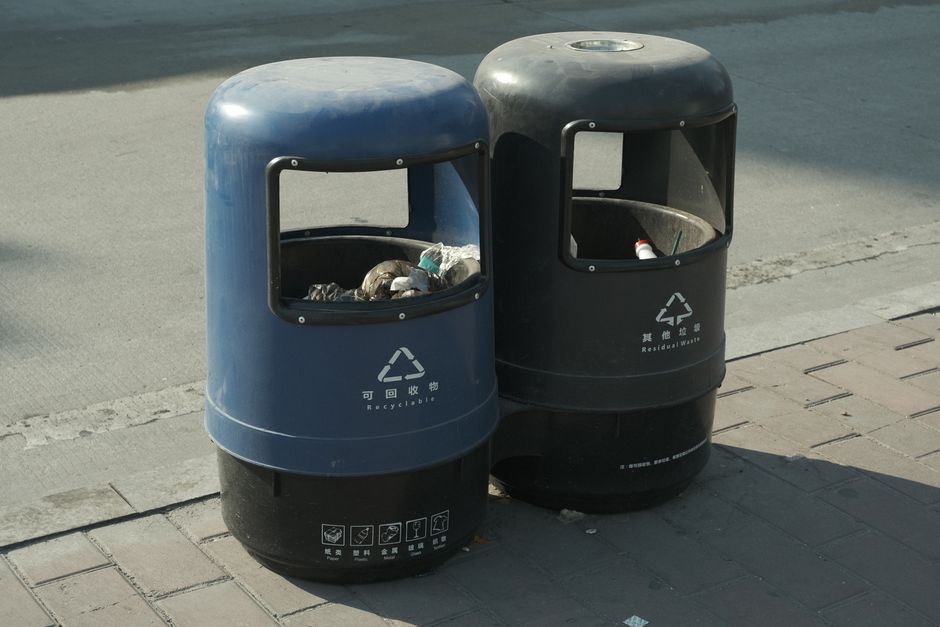
The concept of *bunri-su-geo* (separate collection) is where most foreigners mess up. You cannot just throw everything in one bin. You need to separate your trash into four distinct categories: General Waste, Food Waste, Recyclables (Plastic/Glass/Paper), and Large Waste.
Food waste is the biggest trap. You cannot throw food scraps in with your general trash. In Pyeongtaek, you either buy specific yellow food waste bags or use a designated bin. If you live in an apartment, you likely have an RFID machine that weighs your food waste and charges you accordingly. If you live in a villa, you might have a communal bin. Never, ever put meat bones or eggshells in the food waste—those go in general waste. Rinse your plastic and glass containers before recycling. If they are covered in food, they go in the general trash.
Bulky Waste and the “Sticker” System
Moving into a new place near Camp Humphreys often means buying new furniture or getting rid of old stuff. You cannot just leave a couch or a mattress on the street. You must go to your local *dong* office (community center) or use the local government website to report the item and pay a fee. In return, you get a sticker to attach to the item. Only then will the collectors pick it up. If you dump a mattress without a sticker, you will be tracked down (they check the trash for evidence) and fined heavily.
The Brutal Truth: It’s About Social Conformity, Not Just Recycling
Here is the harsh reality: The trash rules in Korea are not just about environmentalism; they are about social order and community surveillance. If you mess up, your neighbors will notice. In Pyeongtaek, where there is a mix of locals and military personnel, the locals are often hyper-vigilant about foreigners breaking the rules. You will likely be filmed, reported, or publicly shamed by a neighbor. The fines are real, but the social pressure is worse. You are representing your country, and a wrong trash bag can turn a friendly neighbor into a hostile one.
Conclusion
It feels overwhelming at first, but once you get the rhythm, it becomes second nature. The key is to slow down, read the signs in your building’s trash area (use Papago to translate them), and ask your landlord or a Korean friend for clarification. Don’t be the person who ruins it for the rest of us. Get the right bags, separate your waste, and keep your neighborhood clean. You’ve got this.
태그 : 한국 분리수거 방법, Pyeongtaek trash rules, Camp Humphreys garbage guide, Korea recycling tips, Gyeonggi-do waste disposal, Korean trash bags, expat life Korea
🛒 Korea Life Essential: Korean recycling bags, kitchen compost bin
One of the must-have items to make your life in Pyeongtaek (Camp Humphreys), Gyeonggi easier and more enjoyable!
| 🇰🇷 Coupang | Buy on Coupang |
| 🌍 AliExpress | Buy on AliExpress |
This post contains affiliate links. We may earn a small commission at no extra cost to you.
