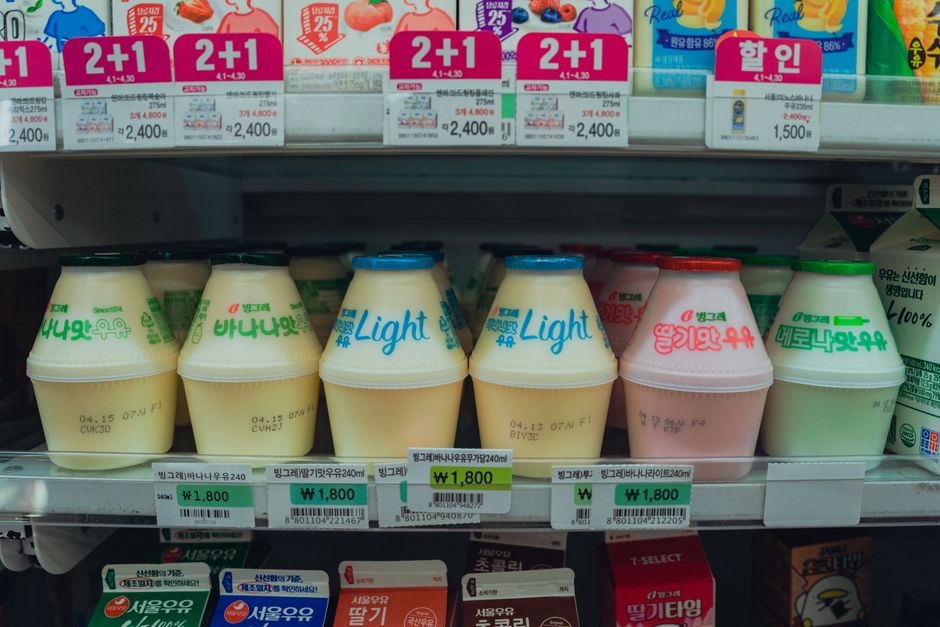
I remember my first trip to a Homeplus in Seomyeon. I was standing in the produce aisle, staring at a single, perfect apple wrapped in Styrofoam and plastic film, and I had no idea how much it cost. I ended up buying a bag of instant ramyeon and a six-pack of beer because I was too intimidated to figure out the weight-based pricing. That was ten years ago. Now, I can navigate a Korean mart blindfolded, and I’m here to save you the same headache.
1. Master the Plastic Bag and Cart System (It’s Not Free)
This is the first hurdle. In Korea, you pay for plastic bags at the checkout. They are not free. If you forget to buy one, you’ll be standing there holding a pile of groceries. The trick? Bring your own reusable bag. Every mart has a small cart area near the entrance. You need a 100-won or 500-won coin to unlock the cart. You get it back when you return the cart. Keep a 500-won coin in your pocket or your phone case. For smaller trips, just grab a basket.
Pro Tip: For the massive Seomyeon Homeplus or Lotte Mart, the carts are huge. You don’t need to fill it. A basket is fine for a week’s worth of essentials.
2. Decode the “Weight vs. Unit” Pricing Trap
This is where most foreigners lose money. Korean marts often price items by weight (g or kg) for things like meat, fruit, and vegetables. But they also sell them pre-packaged. Look at the small yellow or orange sticker on the package. It will say “₩1,980” for 100g. If you want a bigger piece, you have to go to the meat counter and ask the ajumma (the lady at the counter) to cut you a specific amount. She will weigh it, wrap it, and give you a price tag.
Pro Tip: For staples like eggs, milk, and ramyeon, the price is per unit (e.g., 30 eggs = ₩8,900). For fresh produce, always check the per-100g price. A bag of 5 apples might cost ₩5,000, but the loose apples might be ₩3,000 for the same weight. Don’t be shy—just read the tags.
3. The Secret to Finding “외국인 추천 생필품” (Recommended Daily Goods for Foreigners)
You want to buy the stuff you actually need without paying triple the price at a convenience store. Here’s the list of essentials that every expat in Seomyeon should know:
Pro Tip: The “외국인 추천 생필품” section is not a real aisle. It’s a mental list. Don’t fall for the fancy imported goods. Stick to the Korean brands for basics.
The Brutal Truth: You Will Waste Money on “Fresh” Produce at Least Once
The harsh reality is that Korean marts have a very short shelf life for fresh produce. That beautiful, perfect-looking lettuce you bought on Tuesday will be wilted by Thursday. The strawberries that looked amazing in the cart? They might be moldy on the bottom. You have to inspect every single package. Look for the “생산일자” (production date) and the “유통기한” (expiration date). Don’t be shy about picking up the package and smelling it. The ajummas do it all the time. If it looks too perfect, it’s probably been sprayed with something. Buy only what you’ll eat in 2-3 days.
Conclusion: You’ve Got This, Newcomer
Look, the Korean mart system is a bit weird at first, but it’s actually incredibly efficient once you know the rules. You’ll save money, you’ll eat better, and you’ll feel like a local. So next time you’re in Seomyeon, grab your reusable bag, unlock a cart with that 500-won coin, and confidently pick up your “외국인 추천 생필품.” You’re not a tourist anymore. You’re a resident. Now go buy some kimchi and live your best life.

태그 : 외국인 추천 생필품, Busan expat grocery shopping, Korean mart tips Seomyeon, how to buy groceries in Korea, essential items for foreigners in Korea, Korean supermarket hacks
🛒 Korea Life Essential: shopping cart coin
One of the must-have items to make your life in Seomyeon, Busan easier and more enjoyable!
| 🇰🇷 Coupang | Buy on Coupang |
| 🌍 AliExpress | Buy on AliExpress |
This post contains affiliate links. We may earn a small commission at no extra cost to you.