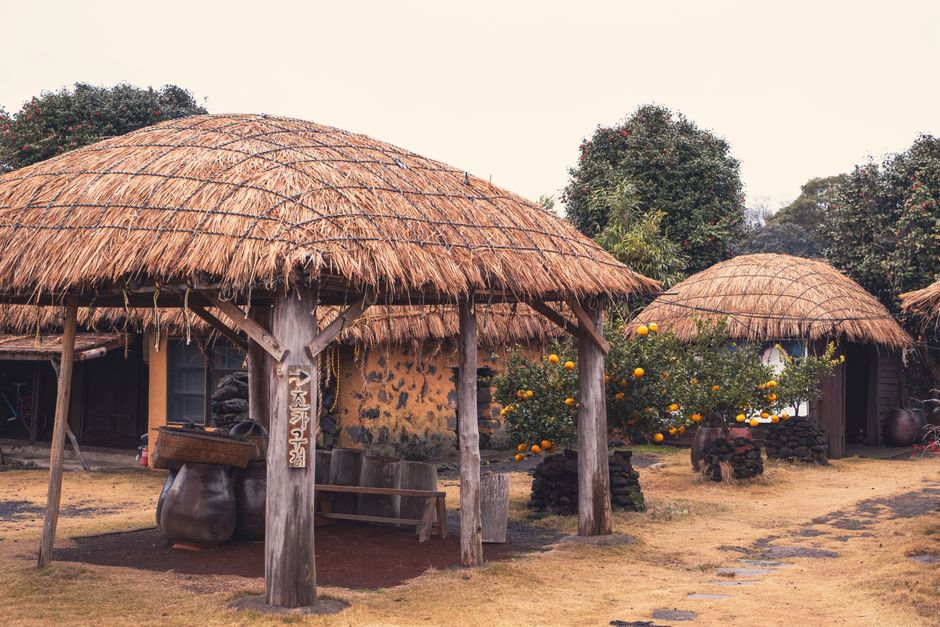
I remember my first month on Jeju Island, thinking I had escaped the chaos of Seoul. Instead, I found myself in a small village where a neighbor I’d never met left a bag of oranges on my doorstep—and I had no idea how to politely refuse or accept it. That’s when I realized that Korean cultural traits aren’t just about city life; they’re woven into Jeju’s quiet, rural fabric too.
Understand the “Jeju Spirit” of Community (Jeong)
On Jeju, the concept of *jeong* (정)—a deep, emotional bond or attachment—is amplified by the island’s close-knit communities. Unlike the anonymous city, your neighbors will notice if you don’t greet them. Actionable tip: Always bow slightly and say “안녕하세요” (annyeonghaseyo) when passing someone, even if you’re not sure they’re a neighbor. This small gesture builds trust. When offered gifts like oranges or seafood, accept with both hands and a smile—refusing can feel like a rejection of their *jeong*. If you can’t eat it, share it with someone else; that’s expected.
Navigate the Hierarchy in Jeju’s Workplace and Social Circles
Korea’s age-based hierarchy is strict, but on Jeju, it’s softened by a more relaxed island vibe. Still, don’t be fooled. If you’re working with locals, always use formal language (존댓말, *jondaemal*) until invited to speak casually. Actionable tip: When meeting someone for the first time, ask their age indirectly by asking their birth year (“몇 년 생이세요?”). This isn’t rude—it’s essential to know how to address them. If you’re younger, call elders “형” (hyung, older male) or “누나” (nuna, older female) even if you’re friends. It shows respect, not distance.
Master the Art of Indirect Communication on Jeju
In Jeju, direct “no” is rare. Locals will say “어려워요” (eoryeowoyo, it’s difficult) or “생각해볼게요” (saenggakhaebolgeyo, I’ll think about it) to mean no. Actionable tip: When asking for a favor or negotiating, watch for non-verbal cues like averted eyes or a slight frown. If you get a vague answer, don’t push—wait a day and ask differently. For example, if a landlord says “maybe” about a repair, follow up with a text in Korean: “수리 가능한 날짜를 알려주세요” (Please let me know a possible repair date). This gives them an easy way to say yes without losing face.
The Brutal Truth:
Even after years here, you’ll still feel like an outsider. The island’s “jeong” is deep but exclusive—it’s for locals first. You’ll be invited to events but still not fully included in the inner circle. Accept this not as rejection, but as a slow, patient process. Your Korean skills won’t fix it; time and consistent presence will.
Final Encouragement:
Jeju is a beautiful, challenging home for expats. Embrace the awkward gift-giving, the subtle refusals, and the quiet community. You’re not just surviving—you’re learning a rhythm that few outsiders ever do. Keep showing up, keep bowing, and keep those oranges coming. You’ve got this.
태그 : Korean cultural traits for expats, Jeju Island expat survival tips, understanding jeong in Korea, indirect communication in Korean culture, age hierarchy Korea Jeju, living in Jeju as a foreigner, Korean community etiquette guide
🛒 Korea Life Essential: Korean face mask sheet set
One of the must-have items to make your life in Jeju Island, Others easier and more enjoyable!

| 🇰🇷 Coupang | Buy on Coupang |
| 🌍 AliExpress | Buy on AliExpress |
This post contains affiliate links. We may earn a small commission at no extra cost to you.