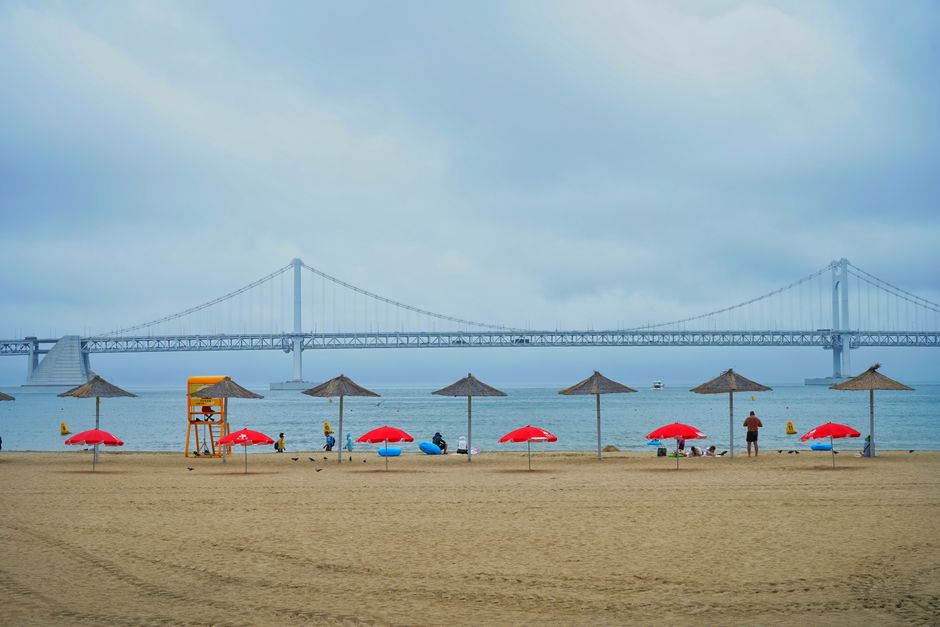
I remember my first July in Gwangalli. I thought I was tough—I’d survived Southeast Asia’s humidity, so Busan would be a breeze, right? Wrong. I stepped out of my officetel at 2 PM, and the air hit me like a wet blanket. Within five minutes, my shirt was soaked through, and the walk to the beach felt like wading through a sauna. By December, I was cursing the opposite direction—the wind whipping off the sea cut straight through my “heavy” coat, and I watched Koreans in long padded parkas walk past me as I shivered like a rookie. I’ve been here a decade now, and I’ve learned that Gwangalli’s seasons aren’t just weather; they are a lifestyle boss fight. Here is your practical survival manual.
The Humidity War: Summer Survival in Gwangalli
Summer (June–August) isn’t just hot; it’s a sticky, salty, and relentless assault. The sea breeze is a lie—it only works at night. Your game plan starts with your living space. If your officetel or villa lacks a *jejogi* (dehumidifier), you are living in a petri dish. Buy a portable one immediately. The dampness will ruin your clothes, your mattress, and your mood. Also, learn to love the *dubang* (traditional floor cooling) if you have it, but more realistically, invest in a good oscillating fan to pair with your AC. Running AC 24/7 will skyrocket your electric bill (progressive rates are brutal), so run the dehumidifier more often—it pulls the moisture out, making 28°C feel like 24°C.
Next, your clothing must be tactical. Forget cotton t-shirts; they become soaked rags. Switch to moisture-wicking athletic shirts or light linen. For the beach, don’t bother with a towel that stays wet—buy a quick-dry microfiber one. And for the love of all that is holy, buy an umbrella that actually has UV protection. The sun here is intense, and the UV index is no joke. You’ll see ajummas with full-face visors and arm sleeves—they aren’t being dramatic; they are being smart. Finally, the *samgyeopsal* rule: Do not attempt a BBQ on the beach during the day. The charcoal heat plus humidity is a recipe for heatstroke. Go at sunset when the sea breeze finally kicks in.
The Wind Tunnel: Winter Survival in Gwangalli
Winter (December–February) in Gwangalli is a different beast. The temperature might say 0°C, but the wind chill off the bay makes it feel like -10°C. The first rule: Never buy a stylish wool coat. You need a *pading* (padded parka) or a proper down jacket that hits below your hips. The wind will find any gap between your coat and your jeans. Speaking of gaps, your ankles are vulnerable. Get thick, thermal socks and boots that go above the ankle. I cannot stress this enough—Korean sidewalks get icy, and the last thing you need is a slip near the Gwangandaegyo bridge.
Heating is the next hurdle. Many older villas and officetels use *ondol* (underfloor heating), which is fantastic. But if you’re in a place with wall-mounted AC units that double as heaters, you will suffer and pay a fortune. Learn to use the timer function. The real trick is layering inside the house. Buy a fleece-lined hoodie (a *mukbang* staple for a reason) and a pair of thick slippers. Your feet will betray you if they get cold. And for those brutal mornings, invest in a reusable hand warmer (the kind with a metal disc you click). They are lifesavers for the walk to the subway station or just waiting for the bus on Gwangan-ro.
The Transition Trap: Monsoon and Yellow Dust
The most underestimated period is the change of seasons. In late June, the *jangma* (monsoon rainy season) hits. It isn’t a gentle drizzle; it’s a week of sideways, relentless rain. Your shoes will be destroyed. Buy a pair of rubber boots or waterproof hiking shoes before the first downpour. Also, grab a long, waterproof trench coat—not just an umbrella. The rain in Busan has a habit of bouncing off the ground and soaking your pants anyway.
Conversely, in the spring (March-April), you get *hwangsa* (yellow dust) blowing in from China. This is not just pollen. The air quality will go from “fine” to “hazardous” overnight. Your Korean friends will be wearing KF94 masks. This isn’t a fashion statement; it’s a health necessity. Buy a box of KF94 masks and run an air purifier in your bedroom. Your lungs will thank you. The dry air in winter also causes static shock on every door handle—just accept it and touch metal keys first.
The Brutal Truth
The harsh reality is that most expat housing in Gwangalli is not built for seasonal extremes. The beautiful “new” build right on the beach will have paper-thin walls and single-pane windows that offer zero thermal insulation. You will spend a fortune on electricity trying to heat or cool a space that leaks energy like a sieve. The landlords know this, and the city’s rental market doesn’t care about your comfort. Your energy bill in January and August will be a shock. Budget for it. There is no way around it except to layer up, use timers, and accept that you will occasionally see your breath indoors while brushing your teeth.
The Final Word
Look, surviving the seasons here is a rite of passage. But once you master the dehumidifier, buy the right coat, and understand the wind patterns of the bay, Gwangalli becomes magical. The summer nights are alive with people drinking beer on the sand, and the winter sunrises over the bridge, when the air is crisp and clear, are breathtaking. You’ll get through it. We all do. And you’ll be stronger—and better dressed—for it. See you on the beach.
태그 : 한국 거주 외국인 계절 관리, Busan expat winter survival, Gwangalli summer humidity tips, Best winter coat for Korea, Korean apartment heating guide, yellow dust season Korea expat

🛒 Korea Life Essential: Reusable hand warmer Korea
One of the must-have items to make your life in Gwangalli, Busan easier and more enjoyable!
| 🇰🇷 Coupang | Buy on Coupang |
| 🌍 AliExpress | Buy on AliExpress |
This post contains affiliate links. We may earn a small commission at no extra cost to you.