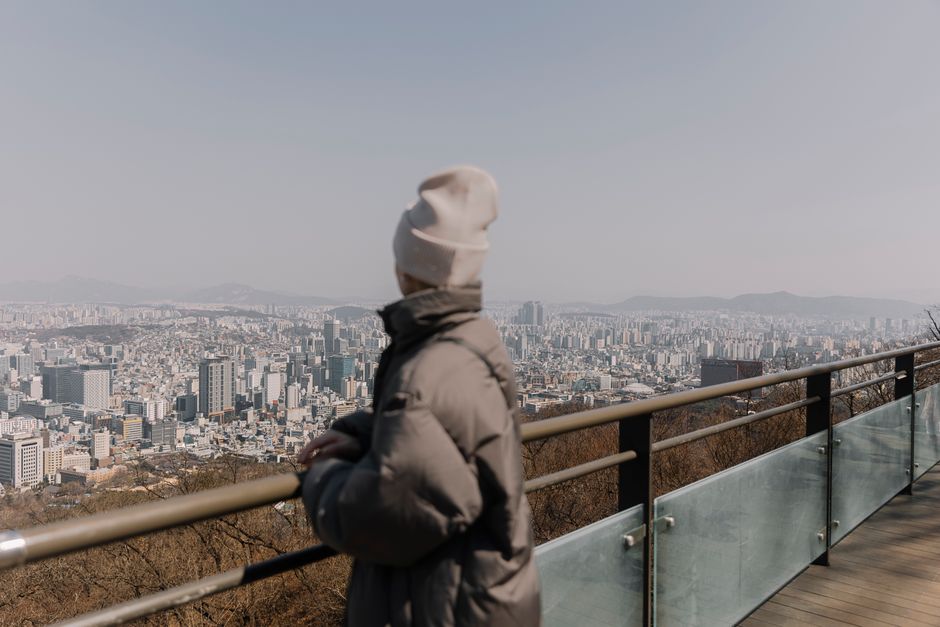
I still remember my first August in Gangnam. I stepped out of Exit 10 at Sinnonhyeon Station, wearing what I thought was a sensible linen shirt, and within ninety seconds it was plastered to my back like wet tissue. The air didn’t feel like air. It felt like someone had wrapped a hot, damp towel around my face and dared me to breathe. Coming from a dry climate back home, I genuinely thought I might pass out somewhere between the Kakao Friends store and a crowded Starbucks. Nobody warned me. My Korean coworkers just handed me a cold barley tea and laughed. That was my welcome to the real Seoul — not the one in the dramas, but the one where the humidity hits 90 percent and the pavement radiates heat like a griddle.
If you’re new to Gangnam or planning to move here, this is the guide I wish someone had handed me. Not the polite tourism version. The survival version.
Tip 1: Master the “Cooling Station” Network Before You Need It
Korea’s summer is not just hot. It’s a full-contact sport. The government actually issues 폭염 (heatwave) warnings, and when those hit, Gangnam transforms. Every subway station, every department store, every convenience store becomes a de facto cooling shelter. Learn which ones near your apartment have the strongest air conditioning and the least foot traffic. My personal rotation: the basement of Hyundai Department Store in Apgujeong, the COEX Mall (obviously), and honestly, any GS25 after 10 p.m. when the teenagers clear out.
Buy a portable neck fan before June. Not in July when every Olive Young is sold out. Before. I keep two charged at all times, plus a small spray bottle for my face. Yes, you will look like a sweaty tourist. Everyone does. The Koreans who look effortlessly cool are either genetically blessed or have already accepted their fate.
For winter, the opposite problem. Gangnam apartments are built for summer, meaning the insulation is often terrible and the ondol (heated floor) system becomes your best friend and worst enemy. Buy a heating pad for your bed, and learn to love layered clothing indoors because Korean offices crank the heat to tropical levels while it’s minus ten outside.
Tip 2: Dress in “Climate Camouflage” and Carry a Backup Everything
Here’s something nobody tells you: in Gangnam, how you dress in extreme weather is a social signal. In summer, Koreans wear light, breathable fabrics and carry small towels (yes, actual hand towels) to dab sweat. Do the same. Linen is your friend. Cotton is your enemy after 30 minutes. And for the love of everything, do not wear flip-flops on the subway. I’ve seen ajummas glare at flip-flop wearers like they personally insulted their ancestors.
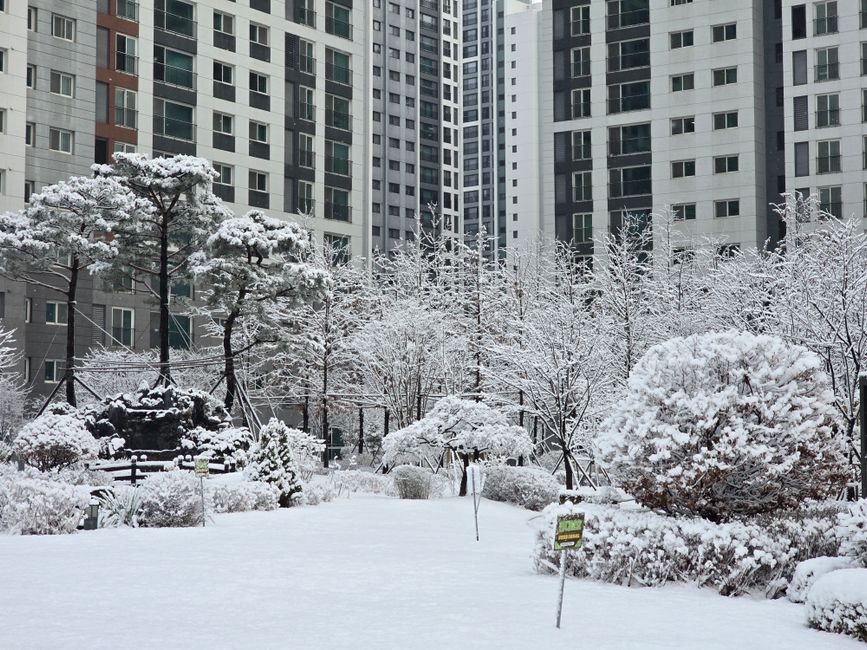
In winter, invest in a proper long padding (long puffer coat). Not a cute one from Zara. A real one. The kind that makes you look like a walking sleeping bag. Everyone in Gangnam wears them, and for good reason. The wind that funnels between those glass towers will cut through anything less. Also, carry hand warmers by the box. They’re cheap at Daiso and will save your fingers when you’re waiting for a taxi that never comes because everyone else is also waiting.
Always carry a backup: an extra shirt in summer, an extra pair of socks in winter. You will sweat through the first one. Your feet will get wet from slush. Learn from my mistakes.
Tip 3: Know Your Emergency Cooling and Heating Spots (Beyond Your Apartment)
Your apartment will betray you. In summer, the aircon unit will either be too weak or too expensive to run all day. In winter, the heating will either dry out your skin until you look like a lizard or cost more than your rent. So build a network of free or cheap climate-controlled spaces.
For summer: PC bangs (internet cafes) are air-conditioned to arctic levels. Libraries, especially the ones near Yangjae, are free and quiet. Movie theaters are obvious but effective. And never underestimate the power of a department store food court — you can nurse a single iced Americano for hours while reading.
For winter: cafes become your living room. Korean cafe culture means nobody will kick you out for sitting for three hours with one drink. My winter rotation includes any Twosome Place or Ediya Coffee near Gangnam Station. Also, jimjilbangs (Korean saunas) are cheap, warm, and you can sleep there overnight if your heating breaks. It’s not glamorous, but it’s warm.
The Brutal Truth
Korea’s summer heat and winter cold are not just uncomfortable. They are genuinely dangerous, and the infrastructure is not always designed with foreigners in mind. Heatstroke deaths happen every year, and many expats underestimate the humidity because they check the temperature and think “oh, 32 degrees, that’s fine.” It’s not fine. The “feels like” temperature in Gangnam in August regularly exceeds 40 degrees Celsius. And in winter, the wind chill can drop below minus 20. If you’re from a mild climate, your body is not prepared. Respect the weather or it will humble you.
Also, the brutal truth about Korean air conditioning culture: it’s either full blast or off. There is no middle ground. You will freeze in summer indoors and roast in winter indoors. Dress accordingly.
Conclusion
Look, surviving Gangnam’s extremes is a rite of passage. Everyone who’s been here more than a year has a horror story about the summer they almost passed out on the subway or the winter they cried because their fingers went numb waiting for a bus. You’ll have yours too. But you’ll also learn to love the small victories: finding the perfect iced coffee spot, mastering the art of layering, and finally understanding why every Korean grandma carries a folding fan in July.
You’ve got this. Just buy the neck fan before June. Trust me.
태그 : 한국 폭염 외국인, surviving Korean summer as a foreigner, Gangnam expat winter guide, Korea heatwave tips for foreigners, Korean winter survival guide, living in Gangnam Seoul, Korea climate for expats
🛒 Korea Life Essential: portable neck fan, heating pad
One of the must-have items to make your life in Gangnam, Seoul easier and more enjoyable!
| 🇰🇷 Coupang | Buy on Coupang |
| 🌍 AliExpress | Buy on AliExpress |
This post contains affiliate links. We may earn a small commission at no extra cost to you.