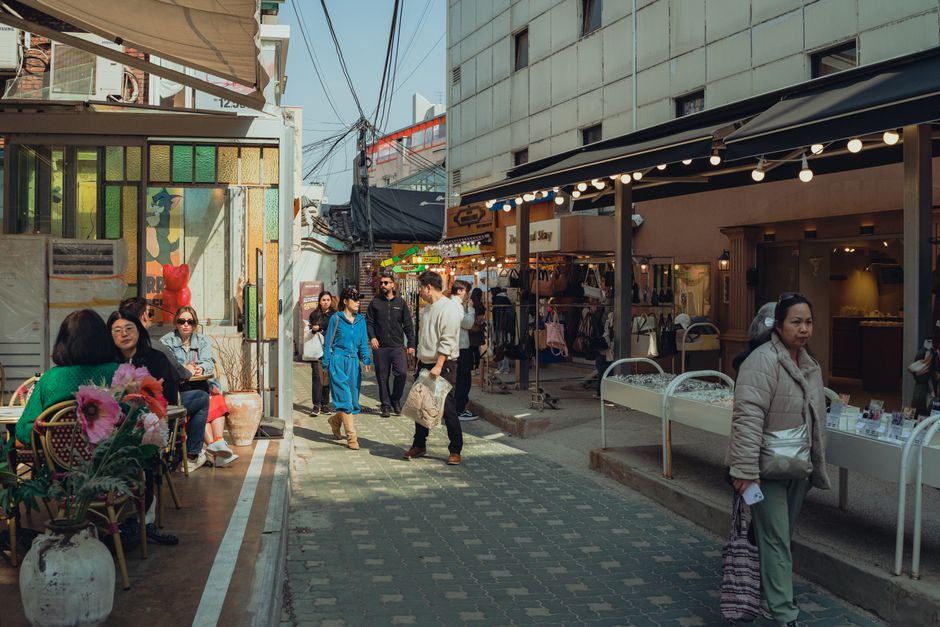
I still remember my first three months in Pyeongtaek. I was living near Camp Humphreys, surrounded by great food, cheap soju, and a ton of people—yet I was lonely as hell. I’d walk around Anjeong-ri, nod at the same shop owners, and go home to an empty apartment. I assumed that because I was in Korea, Korean friends would just… happen. They don’t. Not automatically. But once I cracked the code, my social life in Pyeongtaek completely changed. Here’s what actually works.
Stop Relying on the Base Bubble and Anjeong-ri Alone
Camp Humphreys is massive, and Anjeong-ri (the entertainment district right outside the gate) is convenient. That’s exactly the problem. If your entire social life revolves around the base and the bars immediately outside it, you will almost exclusively meet other foreigners and a handful of Korean staff who are paid to serve you. Real friendships with Koreans rarely start across a bar counter where money is changing hands.
Get out of the bubble. Take a 15-minute bus or taxi ride into Pyeongtaek Station or AK Plaza. Join a hobby group that has nothing to do with the military. I’m talking about a climbing gym in Pyeongtaek, a weekend soccer team at a local park, or a board game cafe near Pyeongtaek Station. When you’re the only foreigner in the room and you’re there because of a shared interest—not because you’re buying drinks—the dynamic shifts. Koreans become curious instead of guarded. I met two of my closest Korean friends at a badminton club in Pyeongtaek. Zero English was spoken for the first month. We just played. That was enough.
Learn the Social Rituals, Not Just the Language
Everyone says “learn Korean.” Yes, do that. But here’s the part most expats miss: it’s not about fluency. It’s about effort and ritual. Koreans in Pyeongtaek, especially older generations and locals outside the base economy, deeply respect the attempt. Even a badly pronounced “안녕하세요” at the local mart opens doors that fluent English never will.
More importantly, learn the social rituals. The first time a Korean coworker or acquaintance invites you for lunch or dinner, they will likely pay. Do not fight them aggressively on this. Instead, accept graciously and then insist on paying the next time. This creates a cycle of reciprocity—a core part of Korean social bonding. Also, learn to drink soju or at least hold a glass properly. If you don’t drink, that’s fine, but be present at the 회식 (company dinner) or the group meal. The bonding happens in the second hour, not the first. Show up, stay a while, and let your guard down.
Use Structured Social Apps and Local Community Centers
Tinder and Bumble are for dating. Don’t confuse them with friendship apps. Instead, use apps like MEEFF or HelloTalk to find language exchange partners in Pyeongtaek specifically. But here’s the critical tip: move the conversation offline fast. A language exchange that stays in a chat window for weeks is a pen pal, not a friend. Suggest a coffee at a cafe near Pyeongtaek Station within the first week. If they flake twice, move on.
Even better, go analog. Pyeongtaek has community centers (주민센터) that offer Korean classes for foreigners. These are goldmines. You’ll meet other expats, yes, but you’ll also meet the Korean volunteers and teachers who are there because they genuinely want to help foreigners integrate. Those relationships are organic. I met a retired Korean teacher at one of these classes who now invites my family to her home for Chuseok every year. That never would have happened through a base event.
The Brutal Truth: You Will Always Be an Outsider to Some Degree
Here’s the harsh reality that nobody wants to say out loud: no matter how fluent your Korean gets, no matter how many years you live in Pyeongtaek, you will never be fully “in.” Korean social circles are often built on shared bloodlines, hometowns, and school alumni networks that go back decades. You are an outsider by default. Some Koreans will embrace you warmly. Others will keep you at arm’s length forever, and it has nothing to do with you personally.
This means you have to be the one who initiates, who follows up, who suggests the next meeting. If you wait for a Korean friend to text you first every time, you will be waiting a long time. It’s not rudeness. It’s just that you’re not in their default mental list yet. Consistency over months, not weeks, is what builds trust here. If you can’t handle being the one who texts first 70% of the time, you will struggle.
Keep Showing Up
Making Korean friends in Pyeongtaek is not a hack. It’s a slow burn. It takes awkward language exchanges, showing up to that hobby group even when you’re tired, and accepting that some doors will stay closed. But the doors that do open? Those friendships are some of the most loyal and generous you will ever experience. So get out of Anjeong-ri, embrace the awkwardness, and keep showing up. You’ve got this.

태그 : 외국인 친구 사귀기, making Korean friends Pyeongtaek, Camp Humphreys expat life, Pyeongtaek social guide, Korean friendship culture, expat Korea survival tips, Pyeongtaek language exchange
🛒 Korea Life Essential: Korean language notebook
One of the must-have items to make your life in Pyeongtaek (Camp Humphreys), Gyeonggi easier and more enjoyable!
| 🇰🇷 Coupang | Buy on Coupang |
| 🌍 AliExpress | Buy on AliExpress |
This post contains affiliate links. We may earn a small commission at no extra cost to you.