I’ll never forget the first time I moved into my officetel in Dunsan-dong. I had a mountain of cardboard boxes from my new microwave and a bag of takeout containers. I confidently walked to the curb and placed them next to a pile of bags. The next morning, my landlord was *not* happy. Apparently, I had committed a cardinal sin of Korean waste management: I didn’t use the official bag, and I mixed food waste with general trash. I learned the hard way that the “Trash Police” (환경미화원) don’t play around here.
Welcome to the wonderfully confusing world of Korean waste disposal. It feels like a part-time job, but once you get the hang of it, it’s just another Tuesday. Here is your survival guide to navigating the bins in Daejeon (and most of Korea) without getting fined.
The Holy Grail: The 종량제 봉투 (Standard Trash Bag)
First things first, you cannot use any random plastic bag for your general waste. You must buy the official government-issued garbage bags for your specific district. In Daejeon, these are usually white or semi-transparent bags with the city logo and district name printed on them.
Here is the kicker: They are not interchangeable. A bag bought in Seoul will not work in Daejeon. You need the Daejeon Dunsan ones. You can buy them at any local convenience store (GS25, CU, 7-Eleven) or local mart (마트). Just ask for “쓰레기 봉투” (sseuregi bongtu).
Now, about the 종량제 봉투 가격 (standard bag price): It varies by district, but in Daejeon, you are looking at roughly 490 KRW to 500 KRW for a 10-liter bag. A 20-liter bag will run you around 980 KRW. It’s not cheap, and it makes you acutely aware of how much waste you produce. My advice? Buy the 20-liter size; the 10-liter ones fill up too fast and you’ll end up spending more in the long run.
The Sorting Religion: You Must Separate Everything
Korea takes recycling (분리수거) very seriously. You can’t just throw a plastic bottle with a label on it into the recycling bin. You have to be methodical.
Tip 1: Rinse and Remove. Plastic containers, cans, and glass bottles must be rinsed clean. Remove the labels if you can. A dirty pizza box is *not* recyclable; it goes in the general trash bag. This is non-negotiable.
Tip 2: The Food Waste Saga. Food waste (음식물 쓰레기) goes into a separate, usually biodegradable, bag (you buy these at the same places). You cannot put bones, shells, or heavily seasoned sauces in there. If you live in a multi-family building like an officetel, there might be a central bin where you just dump it, but you still need the specific bag for it. I learned that boiling ramen water with leftover noodles is a huge no-no.
The Bulk Item Trap: The Sticker System
That old chair you want to throw away? You can’t just leave it on the curb. You have to buy a large waste sticker (대형폐기물 스티커) from your local *dong* office (community service center) or online. The price depends on the item type and size.
Tip 3: Download the local app. The Daejeon city app (or the specific district app) often lets you purchase these stickers online and tells you the exact pickup date. You stick the sticker on the item, put it outside on the designated evening, and pray it’s gone by morning. It’s a great system, but it requires planning. Don’t try to sneak bulky stuff into the general trash bag; that bag will rip and you will be fined.
The Brutal Truth
The fines are real, and the neighbors are your biggest enforcers. In a tight-knit community like Dunsan, your Korean neighbors *will* notice if you are sorting wrong, and they *will* call the management office or the district office. You don’t get a warning; you get a fine of up to 1,000,000 KRW for serious violations, but usually, you’ll get slapped with a 100,000 KRW penalty for sorting mistakes. There is no “I didn’t know” excuse. The rules are enforced harshly, especially in apartment complexes where CCTV cameras are often pointed at the trash areas.
Conclusion
Yeah, it’s a pain in the neck at first. You’ll stand in your tiny kitchen staring at a banana peel wondering where it belongs. But this system is actually brilliant for the environment. Once you get into the rhythm, it takes less than five minutes a day. You’ll become hyper-aware of your consumption habits, and you’ll feel weirdly proud when you successfully crush a plastic bottle perfectly flat.
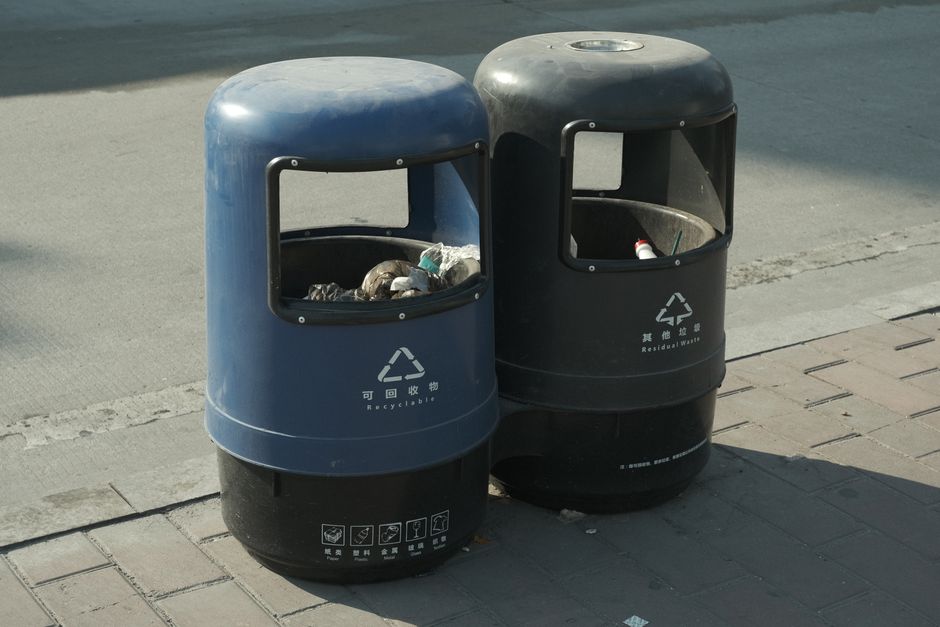
You got this. It’s just trash, but in Korea, it’s a lifestyle. Good luck out there!
태그 : 종량제 봉투 가격, Daejeon trash bag price, Korean recycling rules for foreigners, Dunsan dong waste disposal, how to sort trash in Korea, standard garbage bag Korea, food waste bag Korea
🛒 Korea Life Essential: Kitchen trash can small
One of the must-have items to make your life in Daejeon Dunsan, Others easier and more enjoyable!
| 🇰🇷 Coupang | Buy on Coupang |
| 🌍 AliExpress | Buy on AliExpress |
This post contains affiliate links. We may earn a small commission at no extra cost to you.
