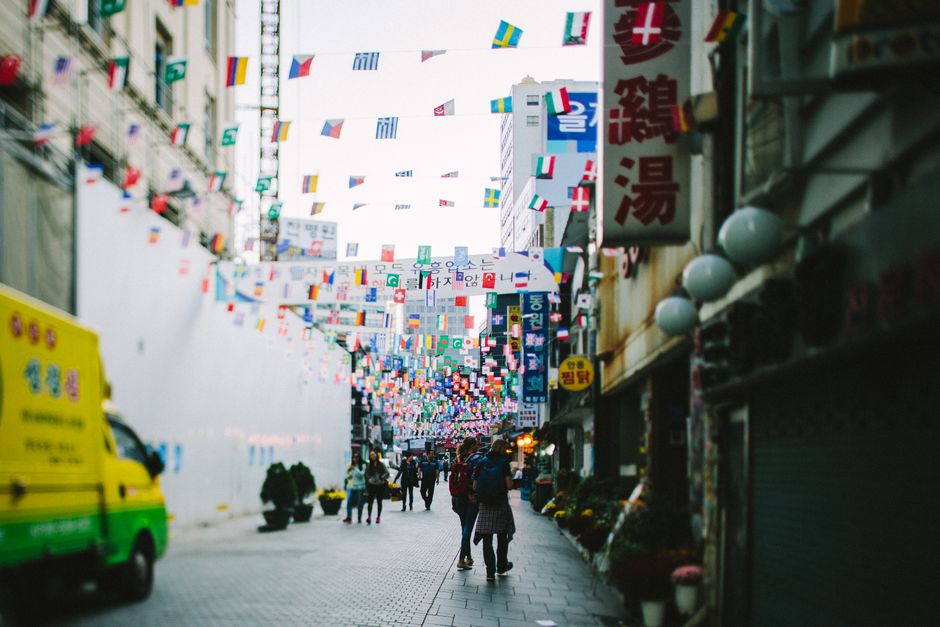
I’ll never forget my first week in Ansan. I was standing on Multicultural Street, surrounded by the smell of lamb skewers and the sound of languages I didn’t recognize, feeling more lost than I had in Seoul. I saw a Korean ajumma drop her grocery bag, and I rushed to help her pick up the scattered tangerines. When I handed them back with a bright, western smile, she didn’t just look unimpressed; she looked almost offended. I had committed a cardinal sin of 한국 예절—I had handed something to an elder with one hand, and my smile was too ‘wide’ for the situation. That was the day I realized that surviving here isn’t just about learning the language; it’s about learning the unspoken choreography of respect.
Here is the survival guide I wish I had back then, specifically tailored for the unique, multicultural chaos of Ansan.
The Two-Hand Rule (It’s Non-Negotiable)
Whether you are passing a credit card to a cashier at Homeplus, giving a colleague a cup of coffee, or receiving a business card from a factory manager, use both hands. If you must use one hand, place your other hand gently on your forearm or wrist. This simple gesture signals that you are giving your full attention and respect to the object and the person. In Ansan, where you interact with a mix of Korean business owners and international workers, this is the fastest way to earn a reputation as someone who ‘gets it.’ It feels awkward at first, but it’s the visual handshake of the country.
The Art of the ‘Ppali Ppali’ (Fast) Bow
In Korea, you don’t hug, and you don’t do a dramatic head nod. You bow. But the depth of the bow matters. For a casual greeting to a neighbor in your *villa* (apartment), a quick, sharp 15-degree tilt of the head is sufficient. When you’re greeting an elder or a boss, you go for a 30 to 45-degree bow from the waist. The key is speed. A slow bow feels sarcastic; a quick bow feels respectful. On Multicultural Street, you’ll see a mix of cultures, but if you are interacting with a native Korean shop owner, always default to the fast, shallow bow. It acknowledges their presence without making it weird.
The ‘Silence’ of Eating and Drinking
This is a big one for foreigners. In the West, we often praise the chef or make conversation during a meal. In Korea, especially with older generations, the highest compliment you can pay is loud, slurping noises (for noodles) and silence. When someone pours you a drink (soju or makgeolli), you must hold your glass with two hands and turn your head away slightly when drinking in front of an elder. If you are the younger person at the table, you are expected to refill the elder’s glass before it becomes empty. Don’t ever fill your own glass first. This isn’t just about food; it’s about observing the hierarchy of the table.
The Brutal Truth
The brutal truth is that you will mess this up, and you will be corrected—sometimes rudely. The Korean concept of *nunchi* (눈치, or situational awareness) is not something you can learn from a blog post. It’s a kinetic, social intuition that locals have been practicing since birth. In Ansan, you might get a pass because of the international vibe, but in a traditional *jeong* (neighborhood) just a few blocks away, you will be judged instantly. Don’t take it personally. The correction isn’t an attack on you; it’s a lesson. The quicker you accept that you are a perpetual student of this culture, the lighter the shame becomes.
The Conclusion
Living in Ansan is a unique privilege. You get the comfort of a global community on Multicultural Street, but you also have the chance to step into the deep, traditional heart of Korean culture just by walking a few minutes in any direction. You don’t have to perfect 한국 예절 overnight. Just be humble, watch more than you speak, and use both hands when you do. You’ll make a hundred mistakes, but each one is a step closer to truly belonging here. You’ve got this.
태그 : 한국 예절, Korean bowing rules for foreigners, Ansan multicultural street tips, Korean drinking etiquette, expat survival guide Gyeonggi, Korean table manners explained

🛒 Korea Life Essential: Korean traditional gift set, Gyeonggi travel guide
One of the must-have items to make your life in Ansan (Multicultural Street), Gyeonggi easier and more enjoyable!
| 🇰🇷 Coupang | Buy on Coupang |
| 🌍 AliExpress | Buy on AliExpress |
This post contains affiliate links. We may earn a small commission at no extra cost to you.