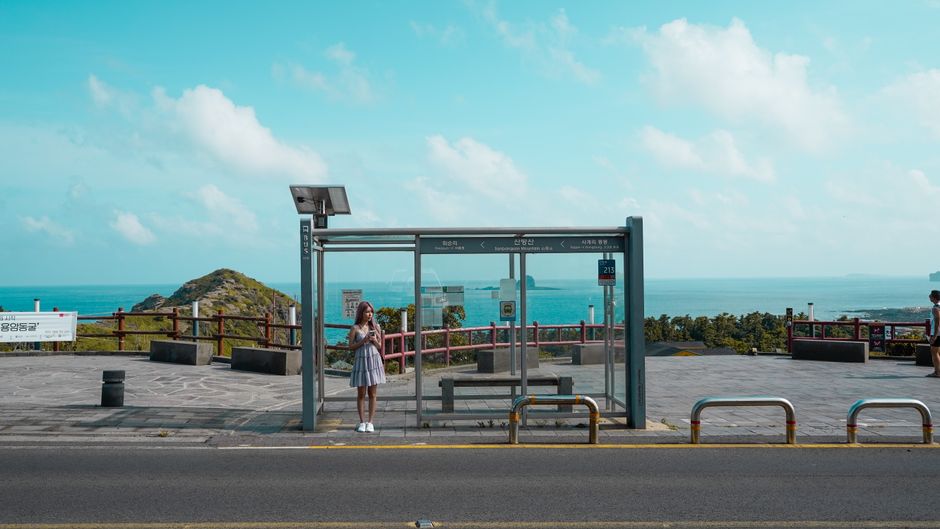
I remember standing at a bus stop in Seogwipo, Jeju, sweating in the humid summer air, watching three buses with the same number pass by in different directions. I had no idea which one actually went to the beach. That’s when I learned that “knowing” how to take the bus in Korea is different from actually surviving it. Here’s the real deal for anyone navigating public transport in Jeju or other parts of Korea.
Always Have a T-money Card and Know Where to Charge It
Cash is a backup, not your primary tool. You absolutely need a T-money or Cashbee card. In Jeju, many rural buses don’t accept cash for exact change, and even if they do, drivers will look at you like you just asked for a ride to Mars. Buy your card at any convenience store (GS25, CU, 7-Eleven) for about 2,500 won. Keep it charged. Pro tip: You can also use your smartphone’s NFC or apps like Kakao T for mobile payments, but in Jeju’s quieter areas, a physical card is more reliable.
Master the Bus Numbering System—It’s Your Map
Jeju’s bus system is simpler than Seoul’s, but it still has a logic you must learn. Buses are color-coded: red (express, long-distance), blue (intercity), and green (local village). In Jeju, red and blue buses connect major hubs like Jeju City and Seogwipo, while green buses get you to smaller towns and tourist spots. Always check the destination board on the front of the bus—it shows the route number and final stop in Korean and English. Use Naver Map or Kakao Maps (not Google Maps) for real-time arrivals and route planning. They are the only reliable apps in Korea.
Know How to Request a Stop and Exit Correctly
This is where most foreigners mess up. On Korean buses, you press a button near the handrails or on the wall to signal your stop. Do this *before* you reach the stop, not after. On Jeju’s rural routes, if you don’t press it, the driver might skip your stop entirely. When the bus stops, tap your card on the reader by the exit door again. This isn’t required everywhere, but it ensures you get a transfer discount within 30 minutes. Trust me, that 100 won saved per transfer adds up over a month.
The Brutal Truth: Korean buses, especially in Jeju, are not always on time, and schedules can be inconsistent due to traffic or tourist crowds. The app might say a bus arrives in 10 minutes, but it could be 20. In rural areas, buses can also stop running early, sometimes as early as 8 PM. Always have a backup plan, like a taxi app (Kakao T) or a willingness to walk.
Stay patient, plan ahead, and remember: every bus ride is a mini-adventure. You’ll get the hang of it, and soon you’ll be navigating Jeju like a local.
태그 : 한국 버스 타는 법, Jeju bus tips for foreigners, Korea public transport survival, T-money card guide, expat Korea bus system
🛒 Korea Life Essential: T-money card Korea
One of the must-have items to make your life in Jeju Island, Others easier and more enjoyable!
| 🇰🇷 Coupang | Buy on Coupang |
| 🌍 AliExpress | Buy on AliExpress |
This post contains affiliate links. We may earn a small commission at no extra cost to you.