I’ll never forget my first week in Daegu. I proudly hauled a bag of mixed trash to the curb, only to have my kindly ajumma neighbor chase me down the street, waving a pair of tongs and shouting, “아니야! 아니야!” (No! No!). Turns out, I had thrown a banana peel in with plastic bottles. In Korea, trash disposal is a serious, surveilled, and often baffling system. But you can master it without a fine.
1. The Color-Coded Bag System is Your Bible
In Daegu, including Dongseongro, you cannot just use any plastic bag. You must buy official, color-coded “종량제 봉투” (standard garbage bags) from any local convenience store (GS25, CU, 7-Eleven) or supermarket. These come in sizes from 3 liters to 100 liters. General waste goes in one bag, food waste in another (usually a semi-transparent or yellow bag). Do not try to cheat with a random bag—your neighbors will report you, and the fine is steep.
2. Food Waste is a Separate Religion
Food waste must be separated from general trash. In many apartments in Dongseongro, you’ll have a dedicated food waste bin with an RFID card (you tap it to unlock and weigh your waste). If you don’t have one, you buy special food waste bags. Pro tip: NO bones, NO shells, NO onion skins, NO chili stems. These are not “food waste” here—they go in general trash. Pour liquids down the sink first. If your food waste bag is too wet, it will be rejected.
3. Recycling Day is a Weekly Treasure Hunt
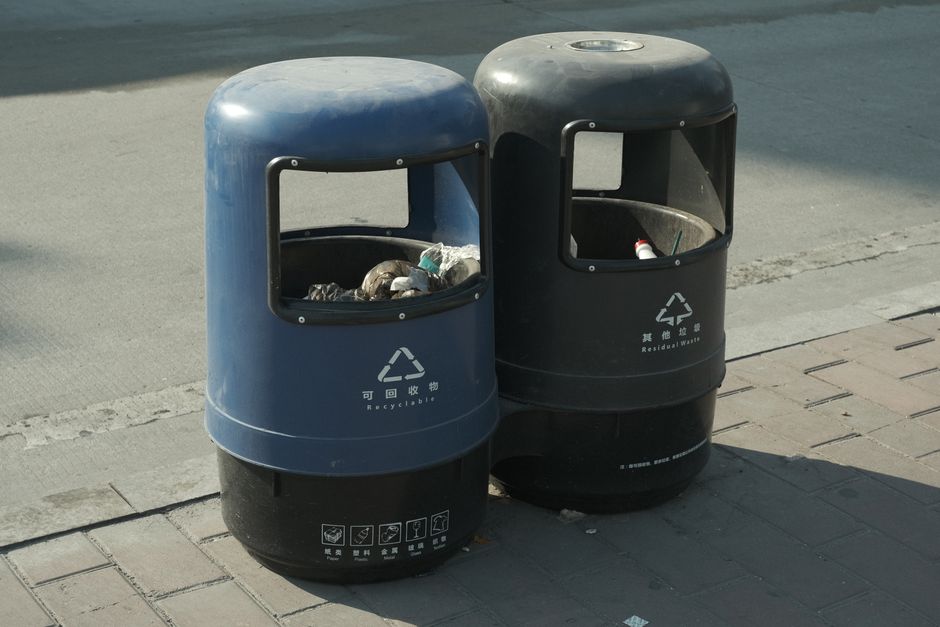
Recycling (분리수거) is done on specific days—usually once a week for your area. You must sort into: paper, plastic, glass, cans, styrofoam, and general recyclables. Rinse everything clean. Remove labels from bottles. Flatten cardboard boxes. In Dongseongro, many apartment complexes have a central recycling station open 24/7, but if you’re in a villa (다세대주택), you’ll need to check the schedule and put your sorted items out on the curb by 6 AM on collection day. Miss it? You’re stuck with it for another week.

The Brutal Truth: The Surveillance is Real
In Korea, trash enforcement is not a joke. CCTV cameras monitor disposal areas, and your bag can be inspected. If they find a forbidden item (like a chicken bone in your food waste), they can trace the bag to your apartment using a serial number or your building’s unique sticker. You will receive a fine in the mail—usually 100,000 won to 1,000,000 won depending on the violation. There is no “I didn’t know” excuse.
You’ll get the hang of it faster than you think. Start by buying a roll of general waste bags from the nearest CU and asking your building manager for the recycling schedule. It’s a small price to pay for clean streets and a quiet life. Good luck, and don’t let the tongs scare you.
태그 : Korean trash disposal rules, Daegu Dongseongro garbage bags, food waste separation Korea, recycling tips for foreigners, living in Daegu expat guide, avoid trash fines Korea
🛒 Korea Life Essential: trash can small Korea
One of the must-have items to make your life in Daegu Dongseongro, Others easier and more enjoyable!
| 🇰🇷 Coupang | Buy on Coupang |
| 🌍 AliExpress | Buy on AliExpress |
This post contains affiliate links. We may earn a small commission at no extra cost to you.