I still remember my first week in an apartment near Camp Humphreys, staring at a mountain of pizza boxes and empty ramen packets, paralyzed by fear. Back home, I just tossed everything into one bin and forgot about it. Here, I was terrified that the building manager would yell at me or, worse, that I’d be fined for doing it wrong. If you are new to Pyeongtaek, the trash game here is strict, but once you crack the code, it’s actually pretty manageable. Here is the no-nonsense guide to getting rid of your garbage without getting a headache.
Buy the Official Bags (Or Else)
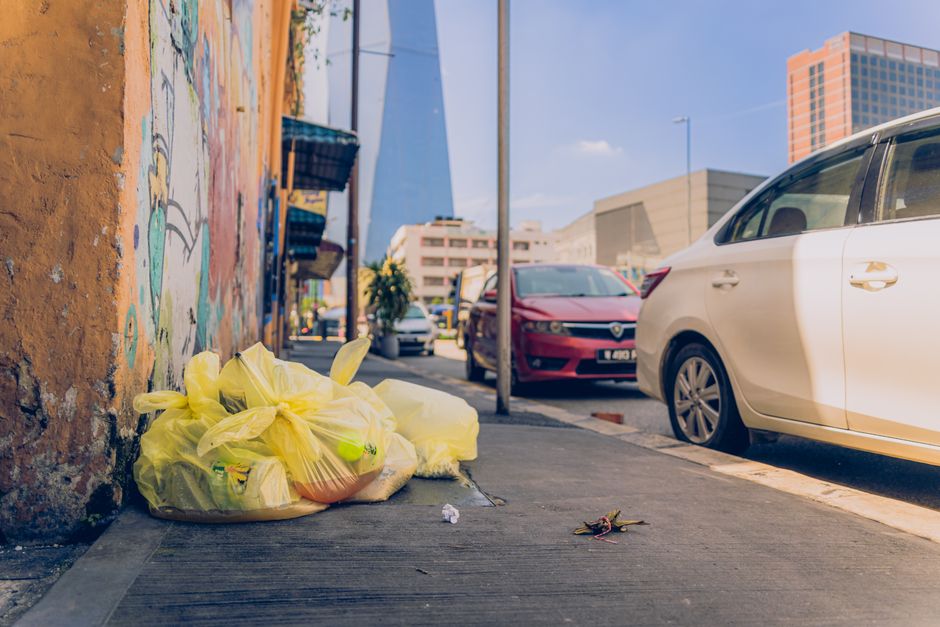
You cannot use standard black garbage bags from the PX or the local mart for general waste. You must buy the designated 쓰레기 종량제 봉투 (Jongnyangje Bags). These are usually yellow or white and are sold at local supermarkets or convenience stores (CU, GS25). The price includes the cost of disposal, which encourages recycling. If you put your trash out in a non-regulation bag, the sanitation workers will simply leave it there, or worse, dig through it to find evidence and fine you. For food waste, you need a separate green bag or a special chip-enabled bin if your apartment complex uses an RFID system.
The Art of the Separation
Recycling in Korea is not a suggestion; it is a religion. You need to separate your waste into distinct categories: paper, plastic, glass, cans, and vinyl. The golden rule? Clean it. If you toss a greasy pizza box or a plastic container with food residue into the recycling bin, it contaminates the whole batch. Rinse your plastics and peel off labels if you can. For large items like furniture or broken electronics, you can’t just leave them on the curb. You have to visit the local community center (Jumin Center) or use your building’s designated sticker system to pay a fee before disposal.
Know Your Dump Site and Schedule
Pyeongtaek has specific rules depending on whether you live in a villa, an apartment, or off-post housing. Most apartment complexes have designated disposal areas in the basement or outside that are monitored by CCTV. Do not dump your trash on a random street corner—illegal dumping is taken seriously here. If you live in a house, you need to place your bags in the exact designated spot on the correct day. Check with your landlord or your building’s security guard (gyeongbi) about the pickup days. When in doubt, ask a neighbor; they are usually happy to help a confused foreigner avoid a fine.

The Brutal Truth
Here is the harsh reality: Nobody will hold your hand. Korean sanitation workers are not your mom. If you put a recyclable item in the general trash bag, or if you leave your trash out on the wrong day, it will sit there and rot. Your neighbors will judge you silently (or loudly), and the fines can be steep. There is no “grace period” for foreigners. You are expected to figure it out immediately, even if you can’t read the signs. It is frustrating, but it is the price of living in a country with such efficient waste management.
Conclusion
It feels overwhelming at first, but mastering the trash rules is a rite of passage for every expat in Korea. Once you get the hang of the 쓰레기 종량제 봉투 system and the recycling rhythm, it becomes second nature. You’ve got this. Take a deep breath, buy the right bags, and remember to rinse your containers. Welcome to Pyeongtaek!
태그 : 쓰레기 종량제 봉투, Korean trash disposal rules, Pyeongtaek expat guide, Camp Humphreys recycling, Korea food waste bin, Korea recycling separation, Pyeongtaek living tips
🛒 Korea Life Essential: recycling bins for home
One of the must-have items to make your life in Pyeongtaek (Camp Humphreys), Gyeonggi easier and more enjoyable!
| 🇰🇷 Coupang | Buy on Coupang |
| 🌍 AliExpress | Buy on AliExpress |
This post contains affiliate links. We may earn a small commission at no extra cost to you.