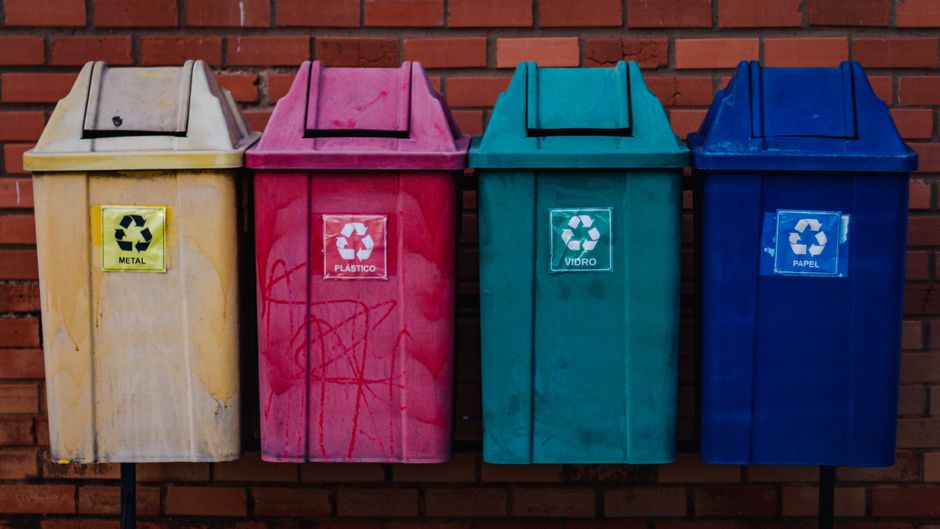
I remember standing in my first apartment in Daegu Dongseongro, holding a bag of stinking garbage, staring at a wall of five different bins with signs entirely in Korean. I had no idea where the chicken bones went, if I needed to wash the yogurt container, or why there was a specific bin just for plastic bags. I ended up hiding the bag in my freezer for three days because I was terrified of getting fined. If you are new to Korea, the complex web of recycling and waste disposal is one of the steepest learning curves you will face. It is not just about throwing things away; it is a precise ritual that requires patience and specific purchases.
Here is how you navigate the system without angering your neighbors or the local district office.
The Mandatory “Jongnyangje” Bags
You cannot just use any black garbage bag from the convenience store. In Korea, you must purchase designated “Jongnyangje” (volume-based waste) bags to throw away general, non-recyclable trash. These are sold at supermarkets, convenience stores, and stationary shops. The price varies by district, so you must buy the specific bag for the district you live in. In Daegu, if you live in Jung-gu (where Dongseongro is located), you need the Jung-gu bags. If you buy a bag from another district, the garbage collectors will often refuse to pick it up, leaving your trash on the street for everyone to see. These bags are expensive on purpose to encourage recycling, so get used to separating everything to save money.
The Strict Separation of Recyclables
The standard in Korea, known as *ja-hwal-yong bun-ri bae-chul gi-jun* (재활용 분리배출 기준), is strict. You generally separate items into four categories: Paper, Plastic, Glass, and Metal. However, there is a catch: everything must be clean. If a plastic container has food residue (like oil in a ramen bowl or sauce in a jar), it goes in the general trash, not the recycling bin. You must rinse containers, remove labels, and crush boxes. For styrofoam, it is technically recyclable, but only if it is clean and free of tape or stickers. In Daegu, specific days are designated for specific recyclables in some apartment complexes, so check your building’s bulletin board or ask your landlord.
The Food Waste Challenge
Food waste is a massive deal here. You cannot throw food scraps in with your general trash. Most apartment buildings have a designated food waste bin, often a high-tech machine that weighs your waste and charges you a fee via a card. If you live in a villa or a house, you might have a specific yellow bin or bag for food waste. The key is to drain all liquids and remove bones (which are general trash) before disposing. If you live in a smaller building without a food waste bin, you might need to buy special food waste bags from the supermarket.
The Brutal Truth
The harsh reality is that the disposal rules are not just guidelines; they are enforced with surveillance cameras and heavy fines. In many neighborhoods, including parts of Daegu, the trash collection is done by private companies or district officials who will open your bags to look for identifying information. If you illegally dump trash or mix recyclables incorrectly, you will receive a fine ranging from 100,000 KRW to over 1,000,000 KRW. There is no “grace period” for foreigners. Ignorance is not a defense, and playing the “confused foreigner” card will not save you from the fine. You are expected to integrate and follow the rules immediately.
Conclusion
It feels overwhelming at first, but once you get into the rhythm, separating your trash becomes second nature. It is a small price to pay for living in a country that is incredibly clean and efficient. Don’t be afraid to ask your landlord or a friendly neighbor for help; most Koreans are happy to show you the ropes if you make the effort. You’ve got this, and soon you’ll be rinsing your kimchi jars like a pro.
태그 : 재활용 분리배출 기준, Korean trash disposal rules, Daegu recycling guide, Korea waste management, expat life Korea, food waste disposal Korea, Jongnyangje bags
🛒 Korea Life Essential: Korean recycling bags, compost bin
One of the must-have items to make your life in Daegu Dongseongro, Others easier and more enjoyable!
| 🇰🇷 Coupang | Buy on Coupang |
| 🌍 AliExpress | Buy on AliExpress |
This post contains affiliate links. We may earn a small commission at no extra cost to you.