—
I’ll never forget the day I nearly got into a screaming match with my elderly Korean neighbor over a half-eaten watermelon rind. I had just moved to Suwon, jet-lagged and overwhelmed, and I casually tossed the rind into the general waste bin. Within minutes, she was at my door, holding the offending rind with tongs and shaking her head in pure, unadulterated disgust. That’s when I learned that in Korea, trash is not just waste—it’s a moral test.
You’re not in Kansas anymore, Dorothy. Here’s how to survive the garbage gauntlet of Suwon.
1. Buy the Right Bags (The “Official” Way or the Highway)
In Suwon (and all of Gyeonggi province), you cannot just use any plastic bag. You must buy the official “종량제 봉투” (standard volume-rate trash bags) from your local convenience store (GS25, CU), supermarket (Emart, Homeplus), or the neighborhood mart. These bags come in sizes from 5 liters to 100 liters and cost a premium—usually around 500 to 1,000 KRW per 20L bag. They are semi-transparent, so the garbage truck workers can see inside.
Pro Tip: Never buy “cheap” knock-off bags from online marketplaces or street vendors. If the garbage collector sees a non-official bag, they will literally leave it on the curb and you’ll get a fine (up to 1 million KRW for repeat offenses). Keep a roll of 10L and 20L bags under your sink at all times. Running out at 11 PM is a nightmare.
2. Master the Art of “Recycling” (It’s a Religion Here)
You cannot just throw everything in one bin. Suwon has a strict 5-part separation system: paper, plastic, vinyl (비닐), cans/glass, and food waste (음식물). But the devil is in the details:
Pro Tip: Download the app “Suwon City” or check your apartment’s KakaoTalk group chat. Every building has a different schedule for picking up bulky waste and recycling. Miss the window, and you’re stuck with a pile of cardboard in your living room for another week.
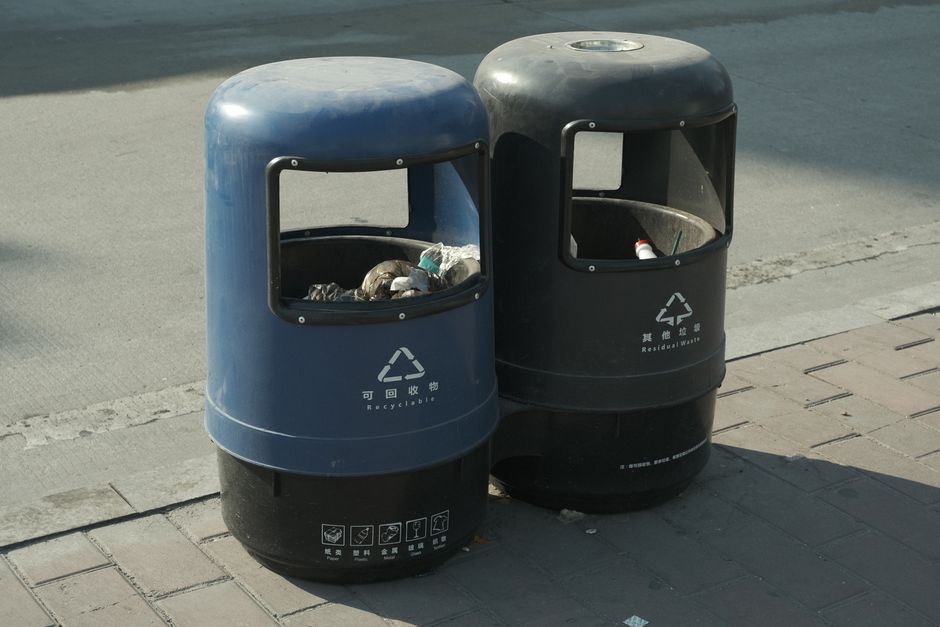
3. The Big Stuff: 대형폐기물 신고 방법 (Large Waste Reporting)
This is the one that trips up every foreigner. Want to throw out that 3-year-old IKEA mattress, a broken TV, or a broken refrigerator? You cannot just leave it on the curb. You must use the 대형폐기물 신고 방법 (large waste item reporting method).
Here’s the secret: Go to the Suwon city website (or the dedicated mobile app). Navigate to the “대형폐기물” section, select your district (e.g., Paldal-gu, Yeongtong-gu), upload a photo of the item, and pay the disposal fee online (usually 10,000 to 50,000 KRW depending on the item). The city will issue a “sticker” that you print out and attach to the item. Then, you place it on the curb on the designated pickup day.
Pro Tip: If you live in a large apartment complex (아파트), don’t do this yourself. The building management office (관리사무소) often has a bulk disposal program. Ask them first—they might charge you a flat fee and handle the sticker for you. This saves you hours of bureaucratic headache.
—
The Brutal Truth
The Korean trash system is not designed for convenience; it is designed for guilt. The “Jjan” (찬) culture—where neighbors report you for improper disposal—is real. A single mis-sorted bag can result in a fine, but worse, it can make you the pariah of your building. The harsh reality is that you will never fully master this system. Even after 10 years, I still have a “maybe” pile of trash that I agonize over. You will make mistakes. Accept it, and just try to minimize your ecological footprint while you’re at it.
—
The Final Word
Hey, you survived the visa run, learned to eat with chopsticks, and navigated Seoul’s subway. You can handle a plastic bag. Just take a deep breath, read the labels, and when in doubt, ask the ajumma at the recycling center. They’re scary, but they’re the ultimate authority.
You got this. Now go take out the trash.
—
태그 : 대형폐기물 신고 방법, Suwon trash bag rules, Korean recycling for foreigners, expat garbage guide Korea, Gyeonggi waste disposal tips, Korean apartment trash schedule, avoiding trash fines in Korea
🛒 Korea Life Essential: Korean trash bag holder, Compostable kitchen bags
One of the must-have items to make your life in Suwon, Gyeonggi easier and more enjoyable!
| 🇰🇷 Coupang | Buy on Coupang |
| 🌍 AliExpress | Buy on AliExpress |
This post contains affiliate links. We may earn a small commission at no extra cost to you.
