Let me paint you a picture. My first month in Dunsan, I was that guy—the one who walked into an Emart and blindly grabbed the first pack of pre-washed, pre-cut vegetables wrapped in four layers of plastic. My checkout receipt was a war crime against my bank account. I ate convenience store kimbap for dinner because I was too scared to cook an unfamiliar ingredient. I thought I was saving money by eating out at “cheap” spots, but those 9,000-won lunches add up faster than a KTX ticket to Seoul. I was bleeding money, and I was miserable.
After a decade here, I’ve figured out the cheat codes. Living in Daejeon—especially the Dunsan area—doesn’t have to mean financial ruin. But it takes a shift in mindset. You aren’t in a Western supermarket anymore. You’re in a country where the best deals are hiding in plain sight, often in places that look a little intimidating at first. Here is my hard-earned survival guide to eating well and keeping your wallet fat.
1. The Holy Trinity: Homeplus, Emart, and the Local *Shijang*
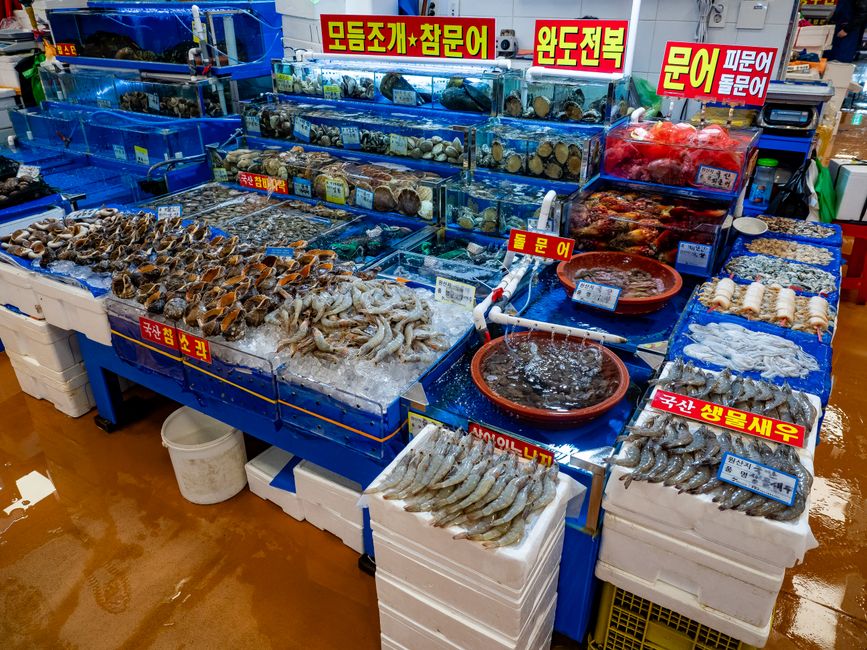
Stop treating the big-box stores as your only option. Yes, Homeplus and Emart are convenient, but they are where you buy specific items, not your daily staples. For meat, produce, and seafood, you need to hit the local market. In Dunsan, you have the Dunsan Traditional Market (둔산전통시장). It might smell like fish and have ajummas yelling prices, but that’s where the magic is.
Here’s the trick: Go at 4 PM. That’s when vendors start discounting produce to clear their inventory. You can get a bundle of greens for 1,000-2,000 won. For meat, skip the pre-packaged stuff. Go to the butcher stall, point at the pork belly, and ask for “samgyeopsal” cut thick. It will be 30-40% cheaper than the styrofoam trays at the mart. Bring cash. Most market vendors are older and prefer it, and you can haggle if you’re buying a lot. Don’t be shy; a smile and a broken “kka-kka-ju-se-yo” (give me a discount) goes a long way.
2. Conquer the “Half-Price” Rack and the *Nora* (Leftover) Section
This is the ultimate expat hack that nobody tells you. In the late evening—usually after 7 PM or 8 PM—supermarkets like Homeplus and Lotte Mart start slapping yellow discount stickers on prepared foods. This is the *nora* section. That 8,000-won chicken gangjeong? It’s now 4,000 won. That fresh sushi platter? Half off. That huge tray of japchae? You’re looking at dinner for two for the price of a coffee.
In Dunsan, the Homeplus near Dunsan-dong is a goldmine. Learn the schedule. Employees usually put out the discounted items in waves, not all at once. Don’t be afraid to hover near the deli section at 7:30 PM. Also, look for the “1+1” or “2+1” deals on snacks, drinks, and ramen. But a word of caution: Check the expiration date. You’re buying it to eat tonight or tomorrow, not to stash in your emergency bunker. This trick alone can cut your monthly food bill by 30%.
3. The Unconventional Dry Goods: Online Shopping and *Daiso*
Listen, you can buy rice, oil, and giant bags of kimchi at the mart, but you’re paying for the overhead of the store. For heavy, non-perishable staples, use Coupang or Market Kurly. If you have a Coupang membership (which many expats share), you can get a 20kg bag of rice delivered to your door for cheaper than the store. It’s a no-brainer.
And for everything else? Daiso. There are multiple Daisos in Dunsan. I’m not just talking about cute stationery. They have an entire section of food storage containers, cooking utensils, and even basic seasonings. But the real budget win is their produce section and frozen goods in some larger branches. More importantly, they sell the best airtight containers for storing your market haul. Buy that giant head of cabbage at the market for cheap, store it properly in a Daiso container, and you’ve eliminated food waste—the true silent killer of a budget.
The Brutal Truth
The “cheap” convenience store meal is a trap. That 4,500-won triangle kimbap and a can of coffee might feel like a budget win, but it’s a poverty tax. You are paying a massive premium for the convenience of not cooking. In Korea, the fresh, unprocessed ingredients from the market are actually cheaper than the processed, ready-to-eat stuff. The real cost isn’t the food; it’s your time and your willingness to learn how to cook a few Korean staples. If you refuse to cook and insist on eating out for every meal, Daejeon will bleed you dry just as fast as Seoul. You have to make the choice to spend an hour in your kitchen if you want to save real money.
Conclusion
Look, adapting to Korean grocery shopping is a rite of passage. You’ll mess up. You’ll buy a fish that you have no idea how to cook. You’ll accidentally buy a “snack” that turns out to be seasoned raw crab. It’s all part of the adventure. But once you crack the code—the market timing, the discount stickers, the online bulk-buying—you’ll realize that living in Dunsan is not only affordable, but you can actually eat like a king for a fraction of what you’d pay back home.
You’ve got this. Now go get your bargain.
태그 : 외국인 장보기 팁, Daejeon Dunsan grocery shopping, cheap food Korea expat, budget living South Korea, Korean traditional market tips, half price food Korea, Daiso Korea hacks

🛒 Korea Life Essential: Korean stainless steel lunchbox
One of the must-have items to make your life in Daejeon Dunsan, Others easier and more enjoyable!
| 🇰🇷 Coupang | Buy on Coupang |
| 🌍 AliExpress | Buy on AliExpress |
This post contains affiliate links. We may earn a small commission at no extra cost to you.