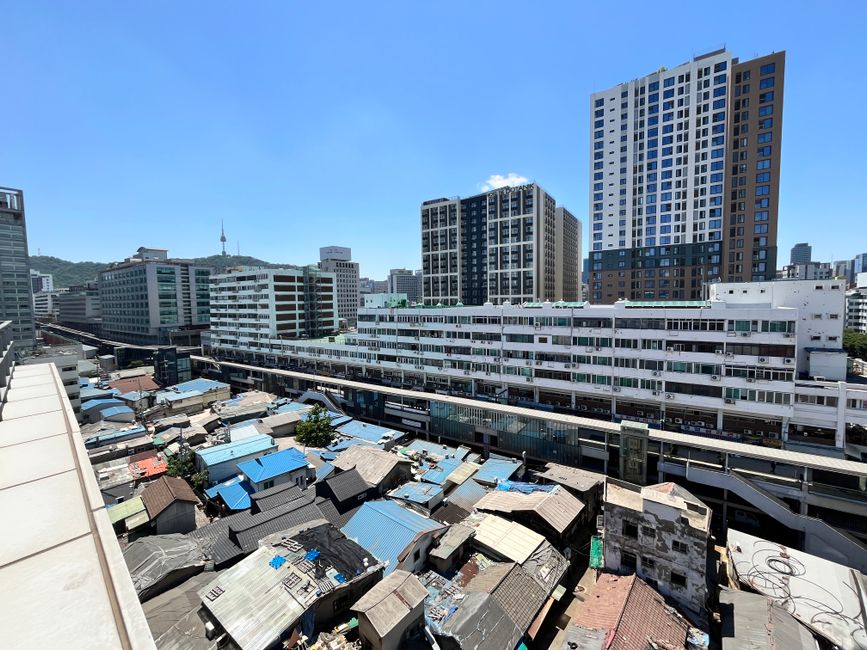
I remember my first apartment hunt in Dunsan-dong. I was fresh off the plane, clutching a piece of paper with a realtor’s number, and I had absolutely zero clue what the difference was between a ₩500 million deposit and a ₩5 million deposit. My head was spinning with terms like 보증금 and 월세. I nearly signed a Jeonse contract thinking I was just paying a slightly larger security deposit. Spoiler alert: I didn’t, but only because my Korean co-worker physically stopped me from signing my life away. That moment of confusion is exactly why I’m writing this guide for you.
If you are moving to Daejeon (or anywhere in Korea, really), understanding the housing payment system is step one. It’s not like the West. You aren’t just picking a place and paying first and last month’s rent. You are playing a game of financial chess with a landlord. Here is the no-BS survival guide to navigating the rental market in Dunsan and beyond.
1. Understand the Big Two: Jeonse vs. Wolse
This is the ‘전세 월세 차이’ (the difference between Jeonse and Wolse), and it is the most critical decision you’ll make.
Wolse (월세) is the standard monthly rent system. You pay a deposit (보증금) and monthly rent. The deposit is usually between ₩5 million and ₩20 million for a small studio (오피스텔) or one-bedroom in Dunsan. The bigger the deposit, the lower the monthly rent. It’s simple, but your money is locked up until you move out.
Jeonse (전세) is Korea’s unique system. You pay a massive lump-sum deposit (usually 50-80% of the property value) and pay zero monthly rent. You get 100% of that money back when you move out. For example, a small two-bedroom in Dunsan might have a Jeonse price of ₩200 million. You hand that over, live rent-free, and get it back two years later.
My advice: If you have the cash (or can get a loan from a Korean bank), Jeonse is a great way to save money. If you don’t have ₩150 million lying around, stick with Wolse. Don’t let a realtor pressure you into Jeonse if you don’t understand the loan structure. For most expats on an E-2 or E-7 visa, getting a Jeonse loan is tough but possible. Start with Wolse.
2. The Dunsan-Dong Specifics: Don’t Get Ripped Off
Dunsan-dong is the “new downtown” of Daejeon. It’s full of high-rise officetels, brand-new apartments, and it has the highest concentration of foreigners and government workers. Because of this, realtors (공인중개사) here are used to dealing with foreigners—and some see you as a walking ATM.
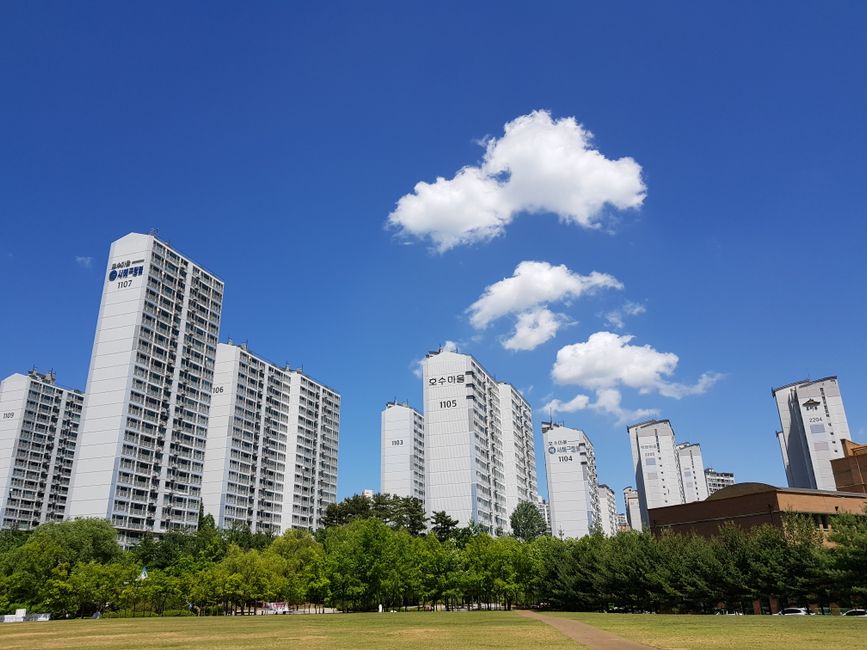
Actionable Tip: Always check the “maintenance fee” (관리비). In Dunsan, the fancy high-rise officetels often have a monthly maintenance fee that is higher than your actual rent. I’ve seen places with ₩700,000 rent but a ₩250,000 maintenance fee because of the “pool” and “gym” you’ll never use. Ask for the *average* management fee for the last three months, specifically for the heating season (November to March). If they say “it’s cheap,” demand the exact number.
Also, use Korean apps like 직방 (Zigbang) or 다방 (Dabang). They have English filters, and you can see the floor plans and prices before you even step into a realtor’s office. This prevents the realtor from showing you only the garbage units they can’t sell to Koreans. If a listing is available on the app, it’s a legitimate baseline price.
3. The Contract & The “Middle Man” Trap
Never, ever sign a contract without a certified Korean realtor present. In Dunsan, there are many “brokers” who speak English and hang around the subway station. They are often just fixers, not licensed. If you use one, you are taking a massive risk.
Actionable Tip: Go directly to a realtor office (부동산) with a Korean friend or a trusted co-worker. You must verify the landlord’s identity (등기부등본) to ensure they actually own the property. If the realtor says, “Oh, it’s a family friend, don’t worry about it,” walk away.
When you sign, you will pay 10% as a down payment (계약금). The remaining balance is paid on move-in day. Your realtor fee (중개수수료) is legally capped, but they will often try to charge you more. The maximum for a standard lease is usually 0.5% of the total deposit. If your deposit is ₩10 million, your fee should be around ₩50,000–₩100,000, not ₩300,000. Negotiate this.
The Brutal Truth
You will not get your full deposit back on the day you move out. Even if you leave the apartment spotless, the landlord will often delay the return of your deposit (보증금) for 1–2 weeks. This is the norm, not the exception. If you are moving from one place to another, you need to have a financial bridge (like a temporary loan from your employer or a credit card) to cover the overlap. Don’t plan on getting your money back on the day you hand over the keys. It almost never happens in Daejeon, especially if you are dealing with a private landlord versus a corporate property manager.
Sign-off
Look, the Korean rental system is intimidating, but it’s also incredibly fair once you understand the rules of the game. Dunsan is a fantastic base—safe, modern, and central. Walk into that realtor office with confidence, armed with your Zigbang screenshots and this knowledge. You’ve got this. You’re not a rookie anymore.
태그 : 전세 월세 차이, Daejeon Dunsan apartment, Korea rental guide, Jeonse vs Wolse, expat housing Korea, officetel deposit Korea, Korean realtor fee
🛒 Korea Life Essential: Portable moving boxes, Tape measure, Dehumidifier
One of the must-have items to make your life in Daejeon Dunsan, Others easier and more enjoyable!
| 🇰🇷 Coupang | Buy on Coupang |
| 🌍 AliExpress | Buy on AliExpress |
This post contains affiliate links. We may earn a small commission at no extra cost to you.