I remember my first week in Hyehwa. I was trying to get from Exit 2 to the National Museum of Modern and Contemporary Art, but I kept circling the same GS25 convenience store. The map app said “walk 3 minutes,” but every turn felt like a maze. I finally asked an ajumma for help, and she just pointed at the ground—literally the subway entrance was under my feet. That’s when I realized: in Korea, public transport is a life skill you learn through humiliation.
Tip 1: Master the ‘지하철 노선도’ (Subway Map) Before You Leave Home
The Hyehwa station (420 on Line 4) is a transfer nightmare if you don’t plan ahead. The line 4 runs north-south, connecting you to Dongdaemun and Sadang, but it’s notorious for long walks between platforms. Don’t rely on your phone at the station—data can lag underground. Instead, download the official “Subway Korea” app and memorize the 지하철 노선도 for your route. Pro tip: Hyehwa has two exits for the university side—Exit 2 is for the artsy cafes, Exit 1 is for the hospitals. Pick wrong, and you’ll walk an extra 10 minutes uphill.
Tip 2: Get a T-Money Card and Load It for Bus Transfers
Buses in Hyehwa are your secret weapon to avoid the crowded Line 4. The Green Bus 2112 goes straight to Seoul National University, and the Blue Bus 151 links to Jongno. But here’s the kicker: you must tap off the bus and on the subway within 30 minutes for free transfers. I’ve seen foreigners get charged double because they forgot to tap out. Buy a T-money card from any GS25, load at least 20,000 won, and always keep it in your front pocket—losing it means paying cash (and cash is a hassle here).
Tip 3: Know the ‘Silence Zone’ and Seat Etiquette
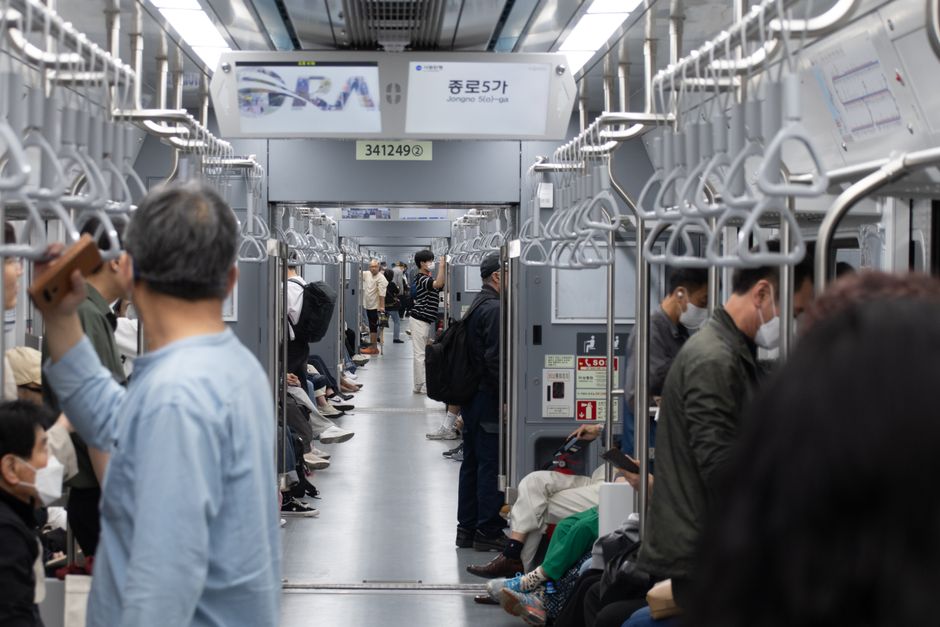
Hyehwa’s subway cars often have “silence zones” near the ends (marked with a phone icon crossed out). I learned this the hard way when my American buddy started chatting loudly about his K-drama obsession, and a Korean man simply stood up and moved seats. Do not talk on your phone in these zones. Also, the pink seats near the doors are for the elderly, pregnant, and disabled—even if they’re empty, do not sit there unless you want dirty looks. If you’re standing, keep your backpack in front of you during rush hour (7:30-9 AM and 6-7 PM).
The Brutal Truth: No one will help you if you look lost. Koreans assume you’ll figure it out, and many young people will avoid eye contact because they’re embarrassed about their English. I once missed three buses because I was too polite to push through the crowd at the bus stop. In Hyehwa, you must be assertive—stand near the bus stop sign, wave your hand when the bus approaches, and tap your card fast. Hesitation costs you 15 minutes of waiting.
Conclusion: Public transport in Hyehwa isn’t friendly; it’s efficient. Once you accept that you’ll make mistakes (and maybe get a few glares), it becomes a reliable tool. Keep your T-money loaded, memorize that 지하철 노선도, and don’t be afraid to ask a taxi driver for directions (they’re usually nicer than subway attendants). You’ve got this, fellow expat. The roads are paved, the trains are clean, and the coffee in Hyehwa’s alleys is worth the lost-in-translation moments.
태그 : 지하철 노선도, Hyehwa subway tips, T-money card Korea, Seoul bus transfer guide, expat public transport Korea, Hyehwa station exits, Korean subway etiquette
🛒 Korea Life Essential: T-money card holder
One of the must-have items to make your life in Hyehwa, Seoul easier and more enjoyable!
| 🇰🇷 Coupang | Buy on Coupang |
| 🌍 AliExpress | Buy on AliExpress |

This post contains affiliate links. We may earn a small commission at no extra cost to you.