You know that moment when you’re standing at a bus stop on Jeju Island, the wind nearly blowing you into a tangerine field, and the bus’s Korean-only announcement blares something you can’t catch? I’ve been there—soaking wet, lost, and praying the bus driver would magically speak English. After a decade here, I’ve learned that public transport in Korea isn’t designed for us; it’s designed for locals. But you can survive—and even thrive—with these three tips.
Master the T-money Card (And Don’t Forget to Tag Off)
This is non-negotiable. Get a T-money card from any convenience store (GS25, CU, 7-Eleven) and load it with cash. On Jeju, buses are your lifeline, and the card works seamlessly across the island. But here’s the kicker: you must tag off when you exit, even if there’s no second reader. Why? Because the system calculates distance-based fares, and forgetting to tag off means you get charged the maximum fare. I once paid ₩2,000 for a 10-minute ride because I was distracted. Download the “Kakao T” app for bus times—it’s in English and shows real-time arrivals. Pro tip: On Jeju, buses are less frequent, so always check the schedule first. The last bus on some routes leaves before 9 PM.
Use Naver Maps, Not Google Maps
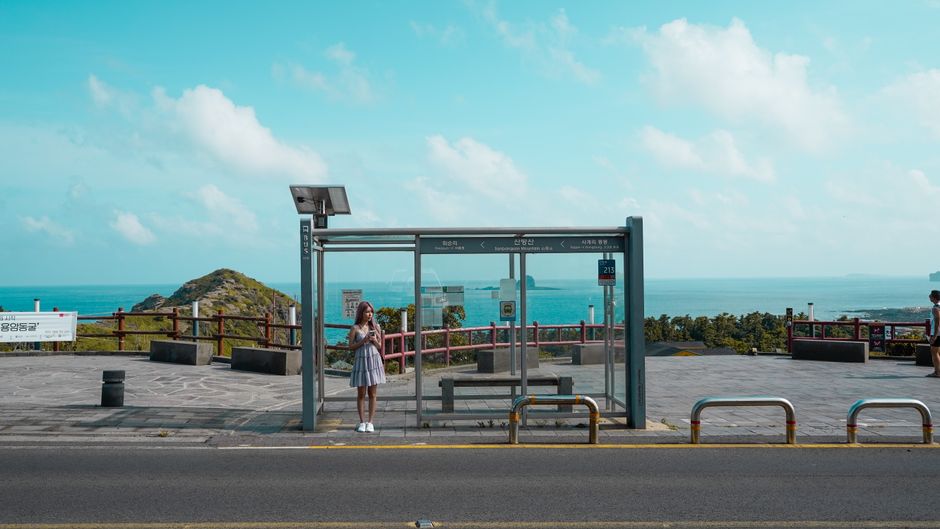
Google Maps is useless in Korea for walking or transit directions. It’ll show you a bus route but then leave you stranded. Switch to “Naver Map” or “KakaoMap.” Both have English interfaces now, and they’ll tell you exactly which bus stop to go to, which bus number to take, and even which door to exit from. On Jeju, Naver Maps is especially critical because bus stops are often just a pole with a number—no English signs. Use the app’s “My Route” feature to save your common trips. And remember: Bus numbers on Jeju often start with “7” (e.g., 701, 702) for intercity routes, while “1” series (e.g., 100, 200) are local. Memorize that.
Sit in the Right Seat (Or Risk a Glare)
Korean public transport has designated seats for the elderly, pregnant, and disabled. On buses, they’re usually the front seats with pink or blue cushions. If you sit there and someone who looks over 70 boards, you must give it up—no exceptions. I’ve seen foreigners get publicly scolded for pretending to sleep. On Jeju, where buses are often crowded with tourists and locals, this is even more pronounced. Also, avoid the “pregnant lady” seats (marked with a sticker) if you’re not visibly pregnant. The locals will judge you silently but intensely. My rule: stand if the bus is more than half full. It’s safer and avoids awkwardness.
The Brutal Truth: English Isn’t Coming to Your Bus Stop
Here’s the harsh reality: Outside of Seoul and Busan, public transport information in English is spotty at best. On Jeju, many bus stops have no English sign—just Korean. The bus announcement system might say “Next stop is…” in English, but it’s often garbled or missing entirely. You’ll rely entirely on your phone’s GPS and a lot of patience. If your battery dies, you’re basically lost. I’ve had to walk 30 minutes in the rain because I missed a stop. So invest in a power bank, and memorize the Hangul for your stop’s name (e.g., “서귀포시청” for Seogwipo City Hall). It’s not fair, but it’s the reality.
Conclusion

Look, using public transport in Korea—especially on Jeju—is a test of your adaptability. You’ll get confused, you’ll miss a bus, and you’ll probably end up somewhere unexpected. But that’s also the beauty of it. You learn the rhythm of the island, you meet locals who might help you, and you get a story to tell. Keep that T-money card loaded, your phone charged, and your sense of humor intact. We’re all in this together. See you at the bus stop.
태그 : using public transport in Jeju Island, Korea bus tips for foreigners, Jeju bus survival guide, expat life in Korea transport, Korean T-money card tips, navigating Jeju buses without Korean